In recent issues, I have been discussing opinions vs facts. Opinions are 10 a penny; we all have them. Whereas facts, in the immortal words of Scotland’s greatest poet, Robbie Burns, “Are chiels that winna ding”.
The Scottish phrase “facts are chiels that winna ding” translates to English as: “facts are fellows [or things] that cannot be overturned or disputed.”
It means that the truth is stubborn and cannot be argued away, changed, or defeated, no matter how much you might want it to be.
The recent gyrations in memory shares and other high-profile shares linked to the AI boom are all about opinions, nothing to do with the facts, which have not changed since 24 June when Micron Technology reported staggering results and exuded confidence on prospects.
Investors, especially those sitting on large paper profits, behave like herds of herbivores. They can be spooked by almost anything, and panic rapidly spreads through the herd. They stampede until they are exhausted and then settle down again as though nothing had happened, and very often that is exactly what had happened – nothing.
It is useful to remember this when shares start falling, especially when the fundamentals are as strong as those driving the technology boom. There is no doubt that the surge in memory prices is putting huge pressure on the devices industry, with companies like Apple being forced to raise prices sharply. Clearly, we need solutions to the memory crisis, but they will be forthcoming and very likely in a way that does not adversely affect companies in the sector.
On the contrary, successful, healthy memory companies are part of the solution because without them there won’t be a solution.
I asked AI why shares in memory companies were falling so sharply.
Memory stocks have plunged due to fears of an AI hardware bubble, cyclical mean-reversion, and massive planned manufacturing investments by dominant players. After a historic boom where manufacturers shifted capacity to data centers, investors are now rotating capital out of the sector.
Key drivers of the selloff:
- Massive Planned Production: South Korean giants like Samsung and SK Hynix reportedly announced plans for massive, multi-trillion-won expansions. This triggered a sharp selloff over fears that massive supply increases will flood the market and burst current pricing power.
- Historical Cyclicality: The memory sector is notoriously boom-and-bust. Because memory is a commodity, prices collapse when supply outstrips demand. Analysts warn that current stock prices were priced for a perpetual boom, making them highly vulnerable to mean-reversion.
- Shifting AI Memory Needs: Investors were spooked by reports (such as Alphabet’s TurboQuant technology and Nvidia’s upcoming Vera Rubin platform) which highlighted algorithms and designs capable of significantly reducing AI memory requirements.
- Slower Consumer Demand: To maximize profit margins, chipmakers redirected manufacturing wafers toward expensive, high-bandwidth memory (HBM). This starved the consumer and enterprise electronics markets (like PCs and smartphones), which resulted in delayed product launches and spec cuts, ultimately threatening end-user demand.
The above are either opinions or facts that have been around for ages, and even if some of what they say happens, it is unclear what the consequences will be. The crisis has to be solved somehow. The data centre explosion has triggered an exponential increase in demand for more memory, and given the bottomless demand for more effective compute and faster data processing, let alone AI reasoning and the brave new world of physical AI (robots, etc.) it seems plausible to argue that even dramatic increases in memory supply will be absorbed and prices which, in the words of SanDisk CEO, David Goeckeler, reflect the true value of the technology, will stay high.
My impression (opinion, I know) is that the entire reason for the latest sell-off in memory shares is that something transient has spooked the herd. I would be looking to buy, not sell. I still believe (another opinion) that memory shares are far too cheap.
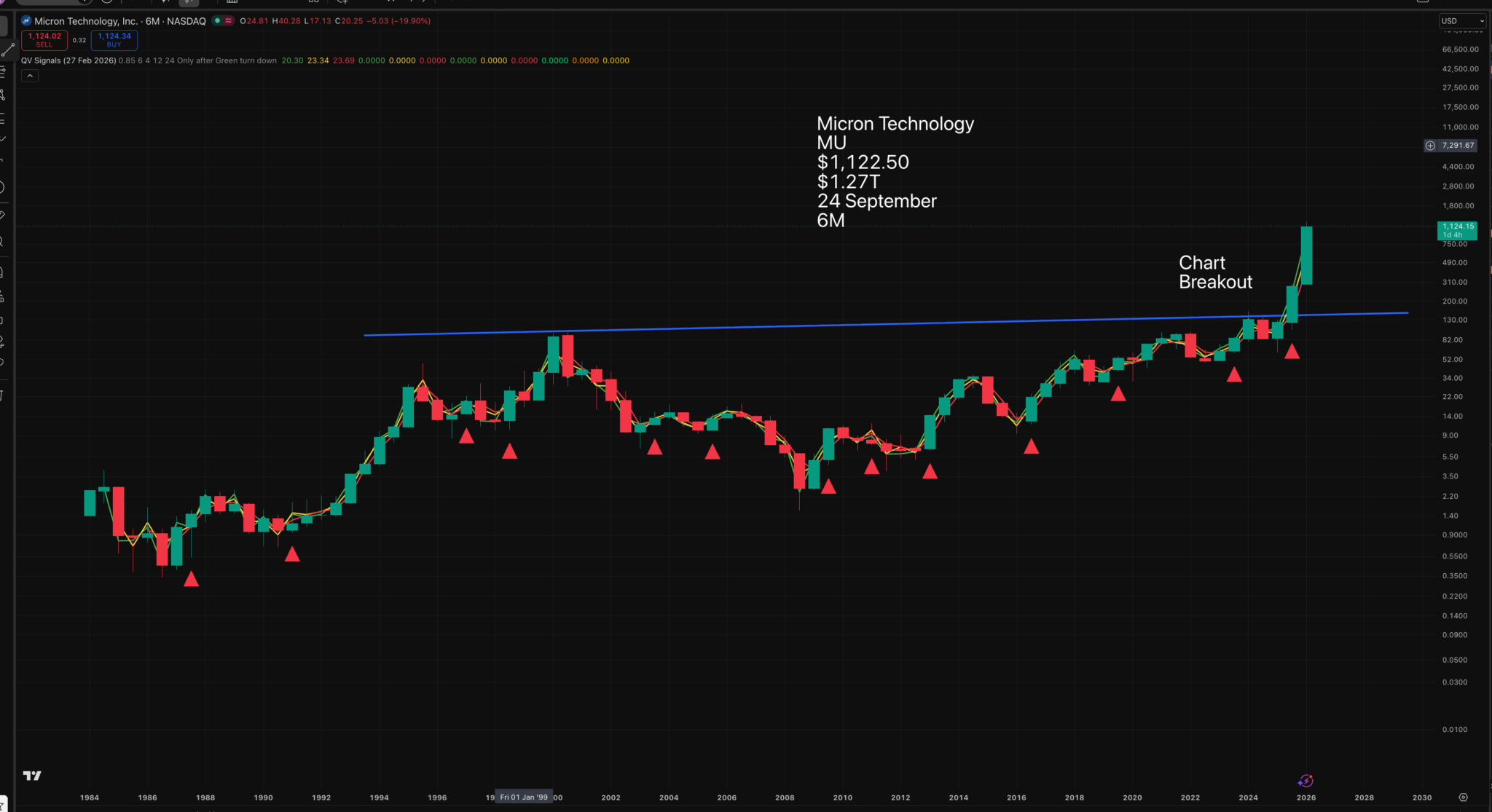
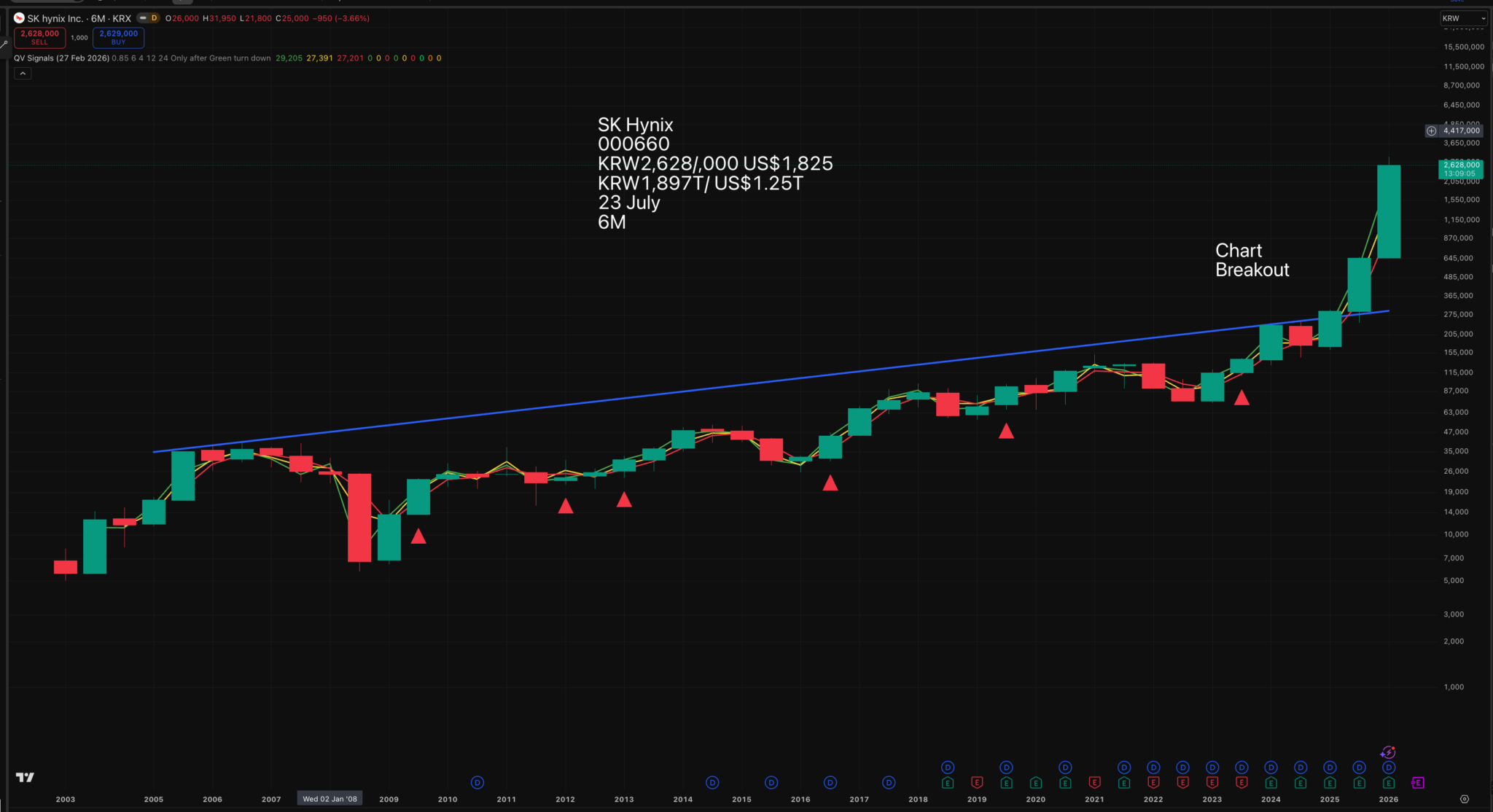
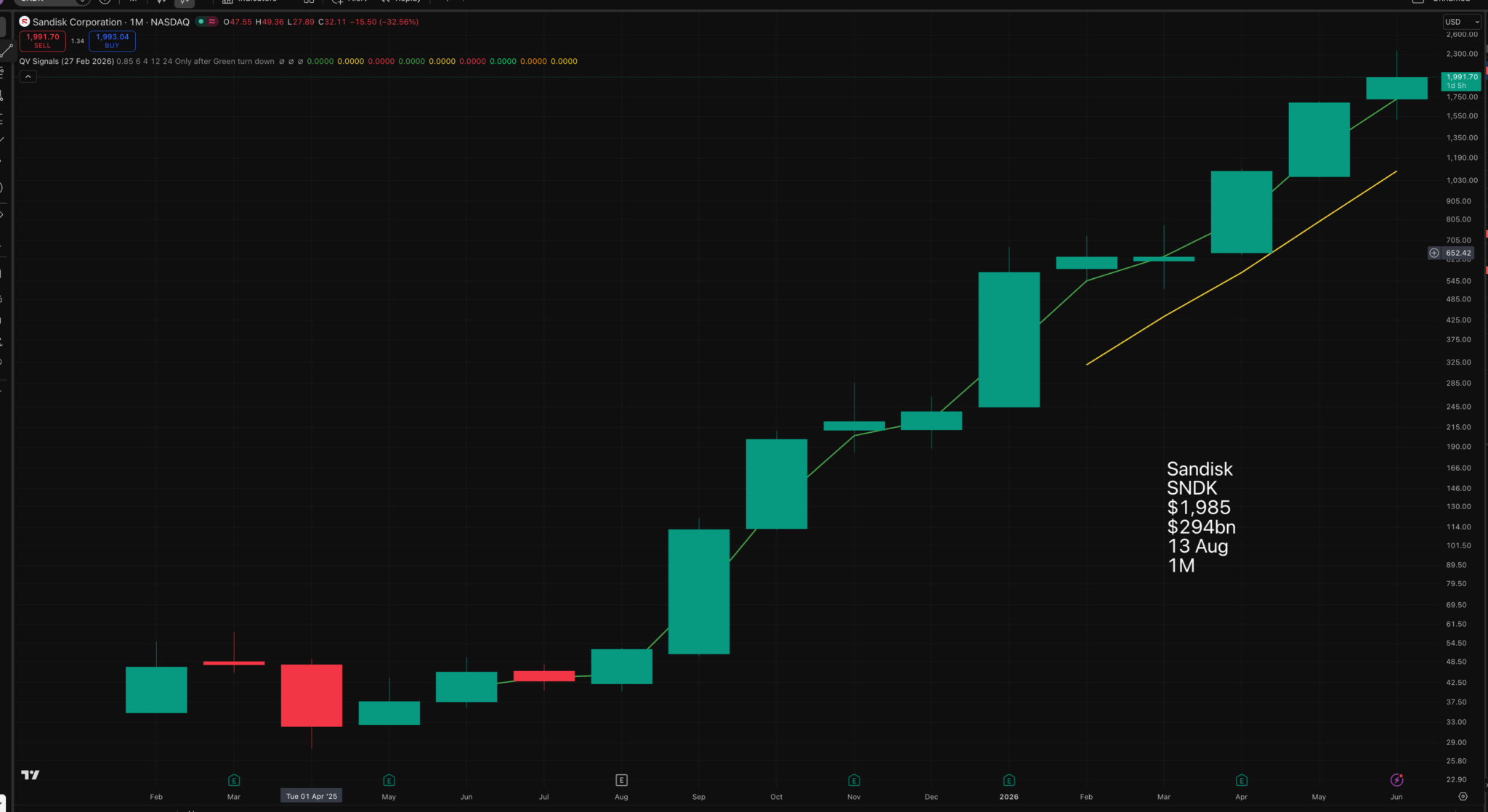
These charts look bullish to me, super-bullish, and the fundamentals, as described by Micron Electronics CEO Sanjay Mehrotra, could hardly be more explosive. It takes a naturally contrarian personality to look at this chart/ fundamentals combination and come away wanting to sell the shares.
But those are not the people selling. The sellers are day traders, the algorithm crowd and people who don’t really know why they bought the shares in the first place.
And if we are talking about great charts/great fundamentals, we must include the two below.
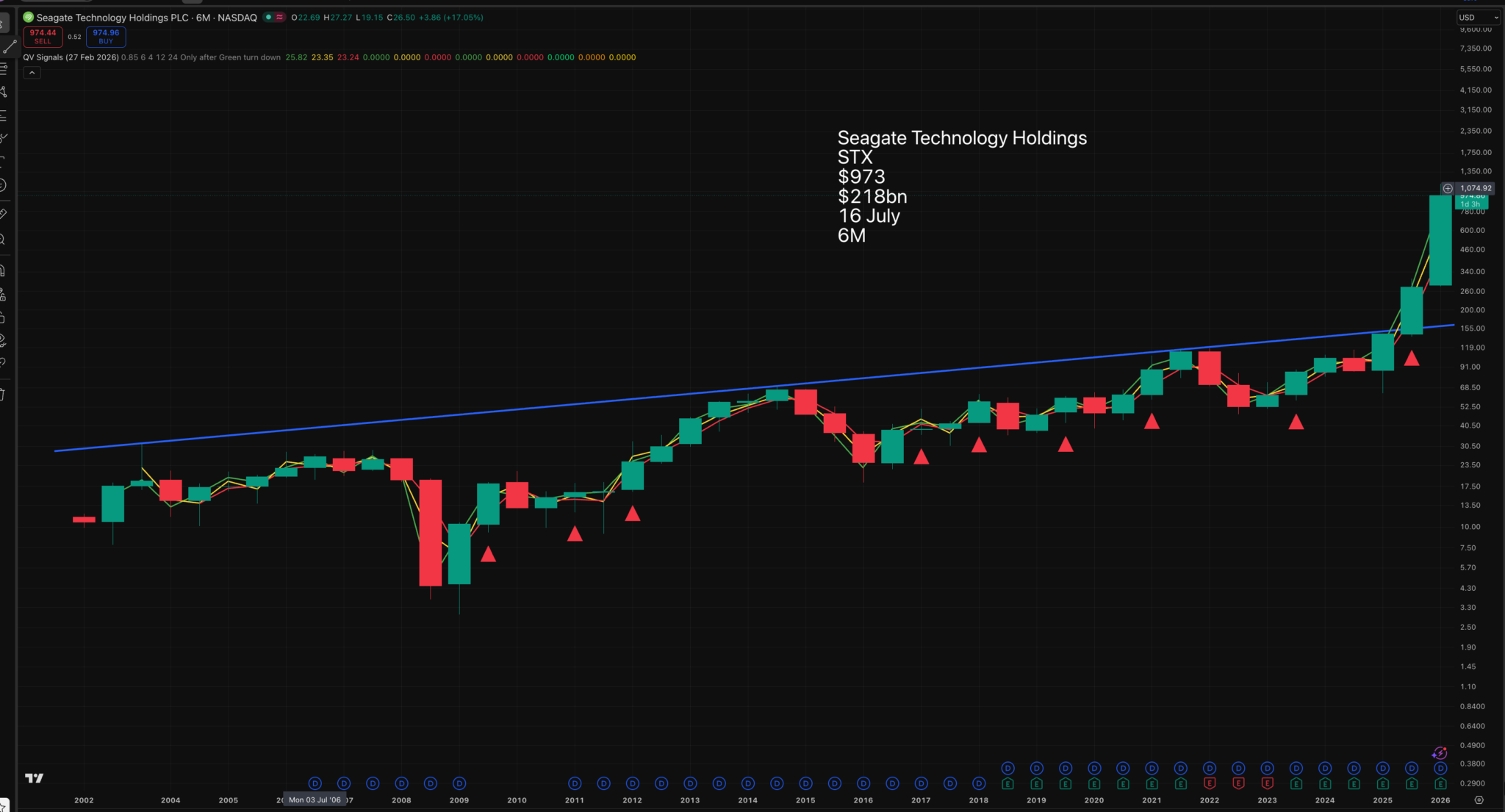
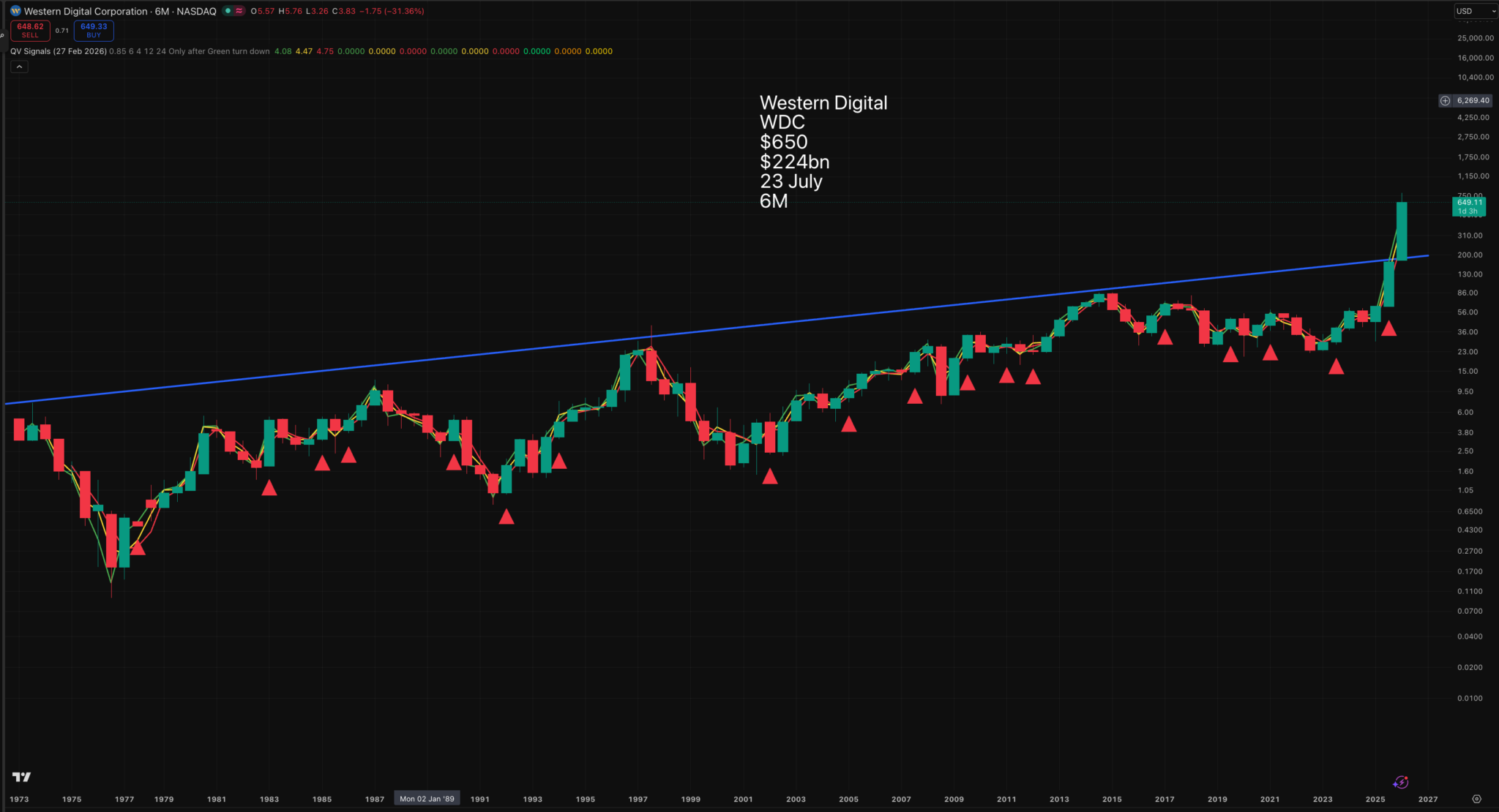
Maybe instead of the famous four, it should be the super six: Micron Electronics, SK Hynix, SanDisk, Kioxia, Seagate Technologies, and Western Digital Corporation.
Remember one of Quentinvest’s favourite rules: shares need to crouch to spring.

Pick One Great Stock (From The AI Trade) And Buy The Buy Signals/ $-Cost Average

The Power Of The Cross – Time To Buy

Cryptos Waking Up