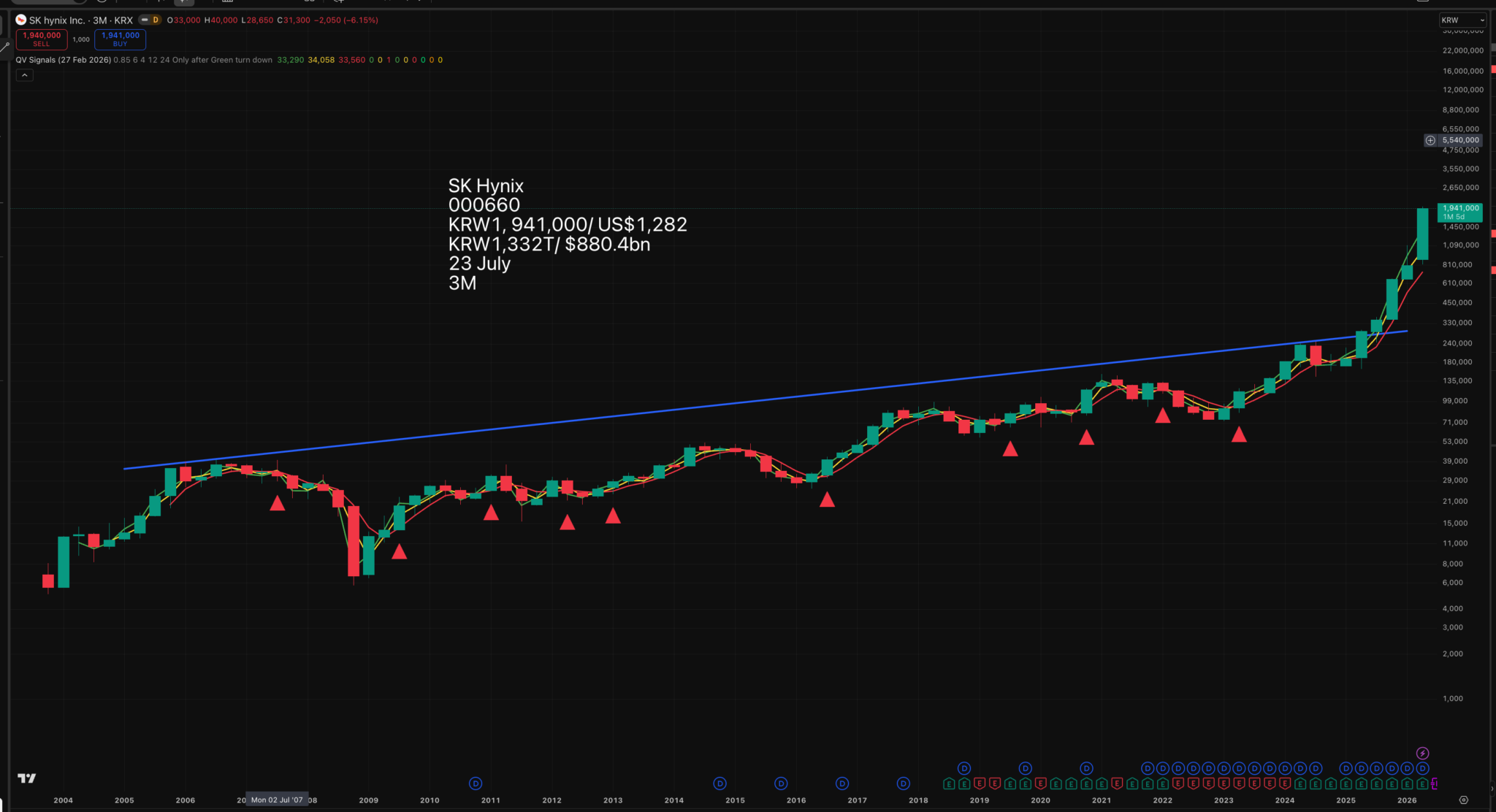
I have flattened the chart above to illustrate the significance of the latest breakout. After two decades oscillating around a gently rising trend, S K hynix shares have exploded higher. It looks to me like a breakout, suggesting years of rising prices ahead.
Forget chart analysis and just use common sense. It is clear from the chart that something important is happening, and we know what it is. A massive new source of demand, AI data centres, has entered the market for memory products and had a dramatic effect on the supply and demand position, with demand overwhelming supply.
The bearish argument is that the leading companies will increase supply dramatically, and by 2028, supply will outstrip demand, memory prices will collapse, and the boom will come to a juddering end. The bullish argument is that the increase in demand, fuelled by the insatiable requirements of AI, will leave supply chasing demand for years, maybe to 2030 or even beyond.
The problem for investors is that we will not know how this will pan out until we reach the later years. If the bears are right, share prices will be lower. If the bulls are right, they could be dramatically higher. And these companies are already big. The top five companies, which dominate the memory market, Samsung, Micron, SK hynix, Kioxia and SanDisk, have a combined value of around US$3 trillion.
This makes them exciting investments because the belief in the industry is that demand will outstrip supply for years, and the new data centre customers are more concerned with security of supply than with price. The memory companies are in a great negotiating position as they have become a key bottleneck in the AI revolution.
There is a particular feature of the memory industry which has made it extremely cyclical in the past. New fabs are expensive to build, and once built, economies of scale make it necessary to run them at full capacity. When all the big beasts in the industry are adding capacity, as is currently planned, we know that a big increase in supply is coming, maybe through 2027 into 2028.
It seems to me possible that demand will be so strong that it will absorb all the additional supply. I don’t really know if that is the case, but neither does anybody else. What I do know is that S K hynix is a very impressive company. At the moment, you cannot trade them on the IG platform because they are only quoted in South Korea and Luxembourg, but they are planning to acquire a US quote.
SK Hynix has confidentially filed with the U.S. Securities and Exchange Commission (SEC) to list American Depositary Receipts (ADRs) on a U.S. exchange. Aiming for a second-half 2026 listing, the South Korean chipmaker plans to issue new shares representing 2% to 3% of its total equity, potentially raising between $10billion and $14billion.
- Target Timeline: Second half of 2024
- Primary Motivations: The capital will fund massive AI semiconductor infrastructure expansions, including a domestic facility cluster in Yongin, South Korea, and a new advanced packaging plant in Indiana, U.S.A..
- Strategic Goals: Management is looking to capitalize on high investor demand for AI hardware and reduce the “valuation gap” that foreign chipmakers often face compared to their U.S.-listed peers.
I have found an amazing piece on the SK Hynix website that convinces me the global memory industry is at the dawn of a transformation, which is why the shares are exploding higher.
Imagine you have an extraordinarily talented assistant — brilliant, capable of completing any task you assign with flawless precision. There’s just one problem: every morning, they arrive at work with no memory of the day before. Your name, your company, the project you briefed them on yesterday — gone. You have to start from scratch every single time.
Frustrating? Absolutely. But according to Kim Juchan, a semiconductor device researcher at KAIST (Korea Advanced Institute of Science and Technology), this scenario isn’t hypothetical. It’s an accurate description of the AI systems we rely on today.
ChatGPT, Gemini, Claude — the large language models (LLMs) we call “intelligent” are, in a clinical sense, suffering from ‘Anterograde Amnesia’. They can recall everything they were trained on — a vast archive of human knowledge compiled at enormous cost by the world’s biggest tech companies — but they cannot form new long-term memories after that training ends.
To compensate, those same tech companies are burning through vast quantities of GPUs and HBM, forcing models to re-read entire conversation histories with every new query. It’s the computational equivalent of photocopying an entire library every time you want to borrow a single book.
Starting in 2026, the competitive dynamics of AI are expected to shift fundamentally. Kim anticipates that the commercial rollout of Google’s Continual Learning1 framework and the Titans Architecture2 will trigger the collapse of Static Inference3, as we know it today. Rather than training once at massive scale and then freezing model weights for inference, the boundary between training and inference will dissolve — inference itself performing fine-grained weight updating to enable continuous post-deployment learning.
Consider a humanoid robot that executes dozens of balance-correction decisions per second. Even if 99.9% of those decisions are processed within the required time window, a single memory-bottleneck-induced latency spike can cause a catastrophic fall. Average performance can be excellent; a single outlier event can compromise the entire system.
As NVIDIA CEO Jensen Huang emphasized at both CES 2025 and CES 2026, the AI industry is on a clear trajectory toward the era of Physical AI10. In this environment, memory predictability — the ability to deliver consistent, deterministic response characteristics — stands to become a more decisive competitive differentiator than peak throughput.
As AI deployment scenarios continue to diversify, the hardware requirements they impose on the underlying memory architecture are pulling the industry in fundamentally different directions. Frontier model training clusters, robotic AI systems running continuous factory surveillance, and agentic AI platforms serving tens of millions of concurrent users each demand a fundamentally different set of physical performance requirements — a reality that no single, monolithic memory architecture can adequately address.
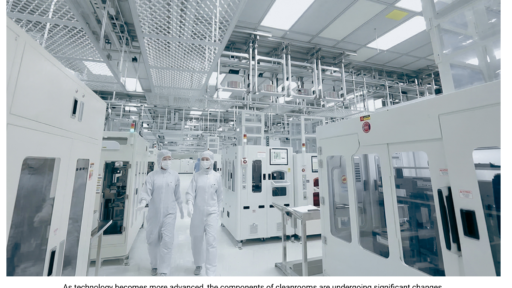
The gap between a cleanroom built in 2019 and one built in 2026 illustrates just how dramatically the technical bar has been raised. Process scaling and the growing density of manufacturing equipment have expanded the required cleanroom footprint — driving up both construction costs and overall capital expenditure accordingly. Beyond the fab itself, advanced packaging has emerged as an equally critical discipline. The P&T7 (Packaging & Test) fab SK hynix currently has under construction in Cheongju, South Korea alone is expected to draw roughly $13 billion (₩19 trillion) in investment. This positions SK hynix to deliver the full-stack AI Memory solutions its customers need – at the right time, as AI data center expansion accelerates and edge device adoption continues to grow
The rise of continually learning AI — alongside an increasingly diversified memory semiconductor portfolio — is opening a new frontier of opportunity for the semiconductor industry. Seizing that opportunity, however, will require the manufacturing capacity and large-scale capital investment to match.
The current AI investment cycle may yet enter a period of correction. But the broader transition — toward AI systems that learn, retain, and evolve autonomously — looks increasingly irreversible. 2026 stands to be the year in which that shift begins to take shape as concrete industry structure. At the center of this transformation, memory semiconductor technology remains the indispensable foundation. How the global memory industry rises to meet these demands — and which players define its next architecture — will be one of the defining technology stories of this decade.
These are just snippets from a fascinating article that highlights the huge memory requirements of AI and the need for the memory industry to reinvent itself to meet those demands. The idea that we are just in the old cycle seems to me absurd.
Below is what SK Hynix said about the outlook alongside its Q1 2026 results.
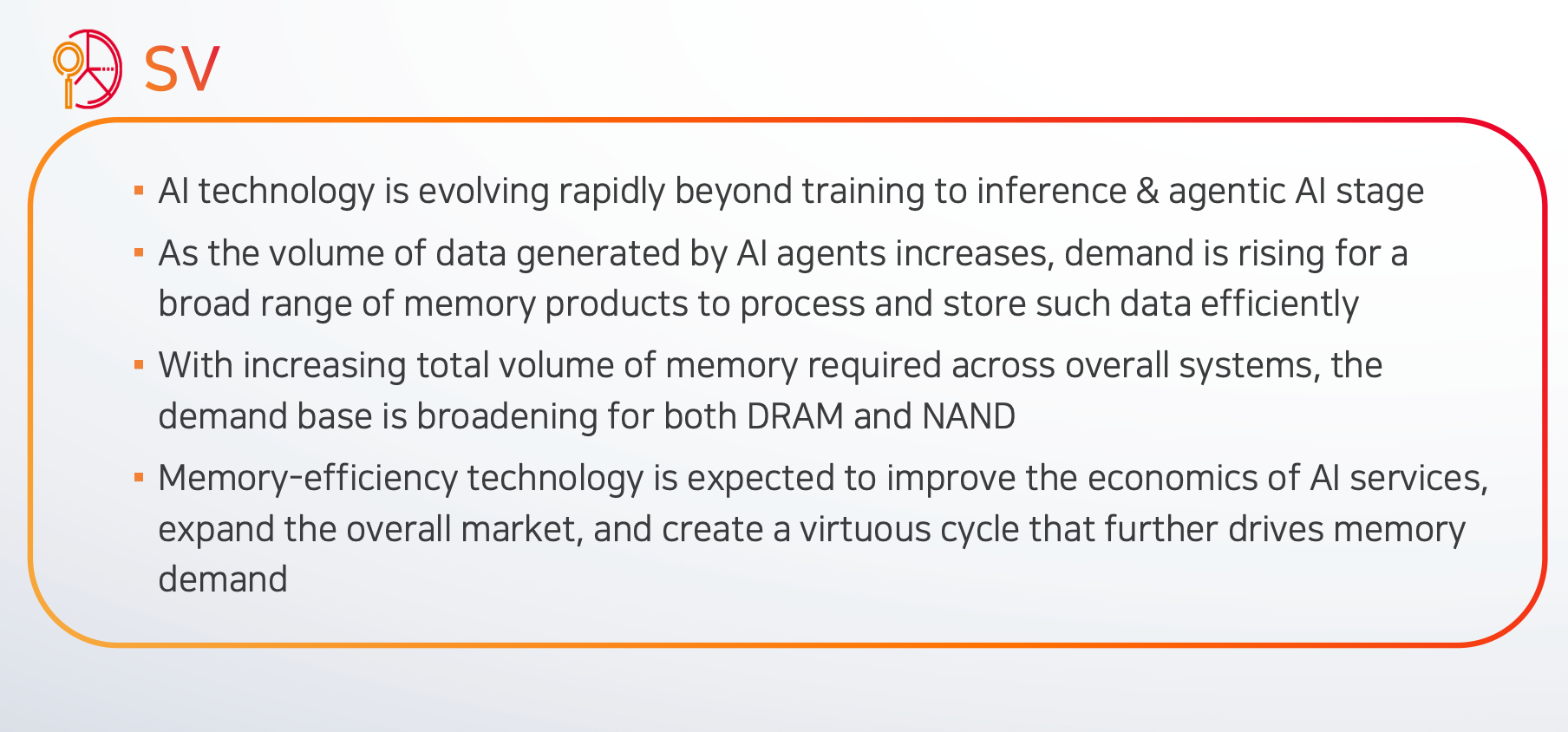
Business is booming.
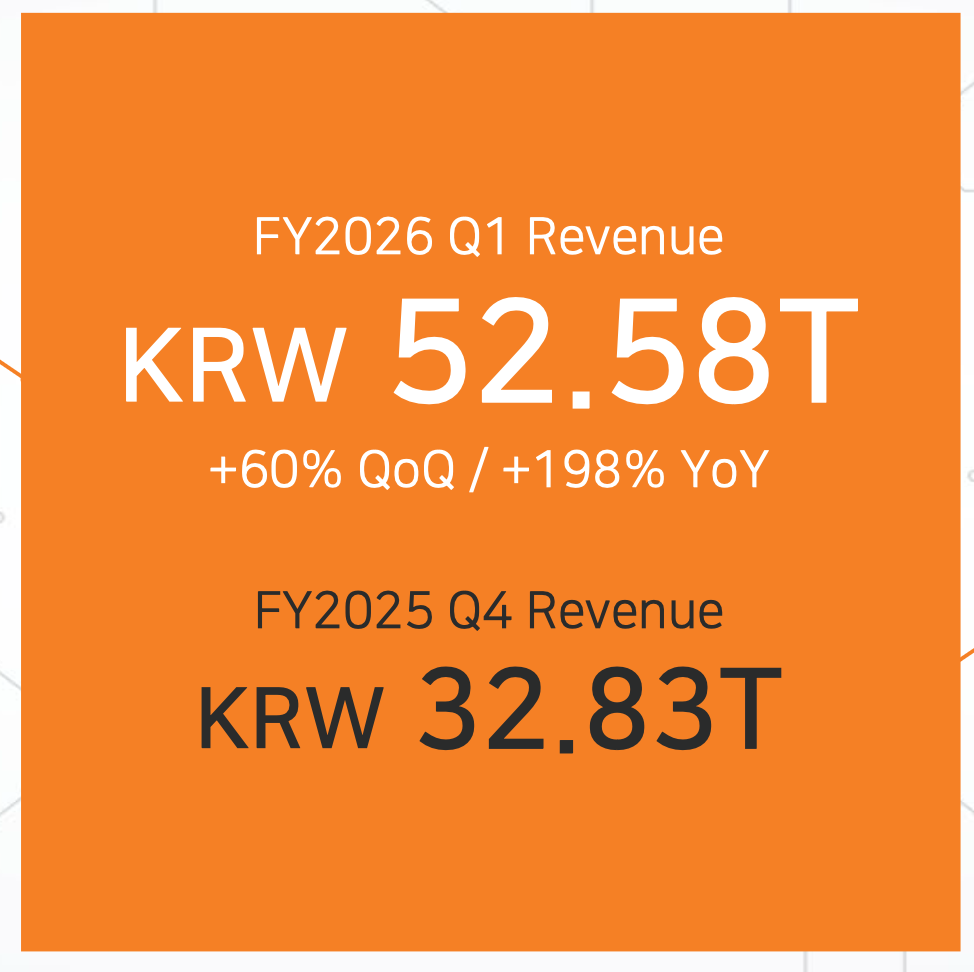
Below is the company’s summary of what is happening.
As memory becomes increasingly critical in AI computing, demand for high-performance memory is surging while supply remains constrained, expect favorable pricing environment to continue for the time being
Does this seem like the best moment to sell the shares? I don’t think so.
Share Recommendations
S K Hynix. 000660
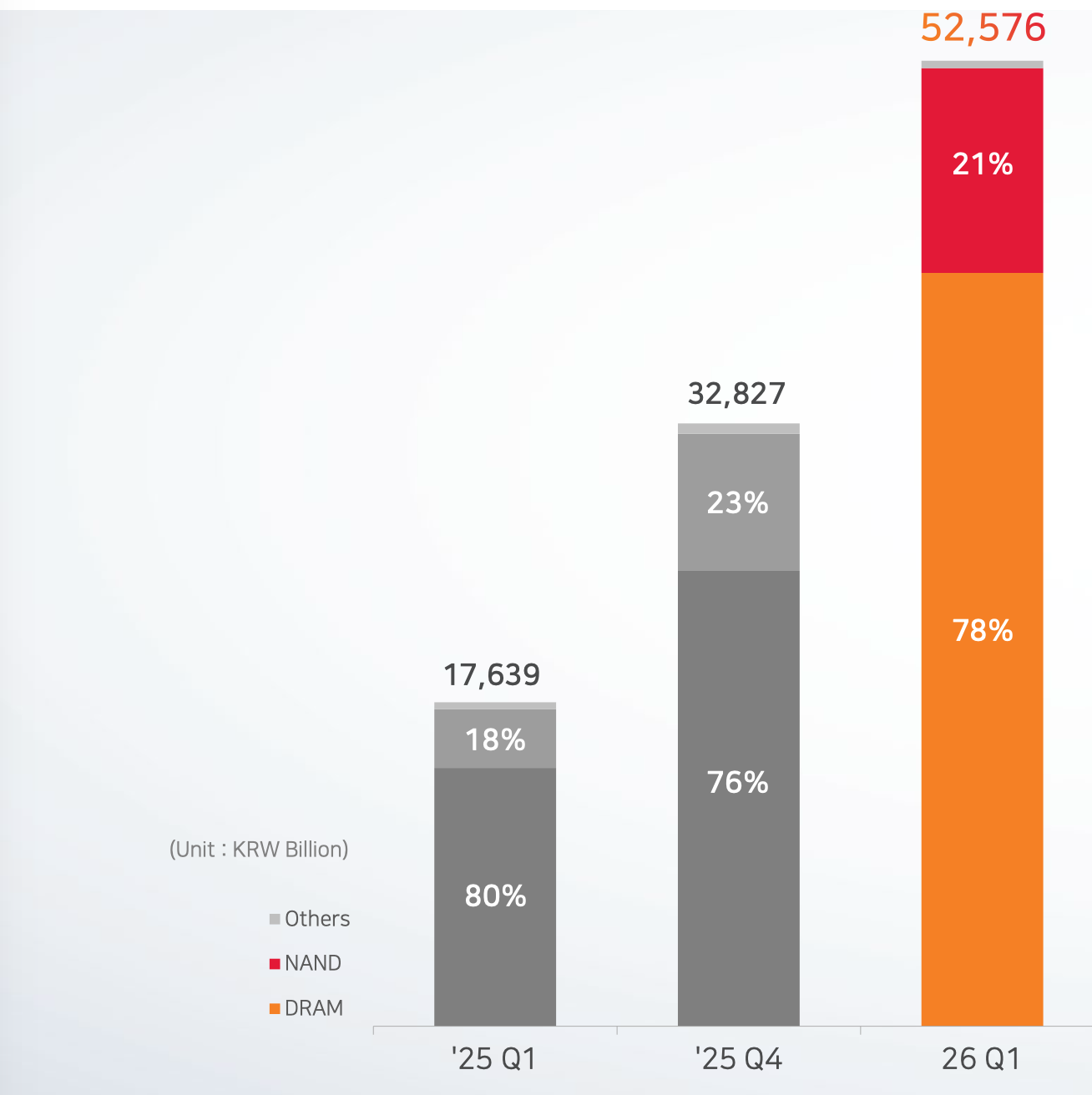
Just look at the growth.

Pick One Great Stock (From The AI Trade) And Buy The Buy Signals/ $-Cost Average

The Power Of The Cross – Time To Buy

Cryptos Waking Up