
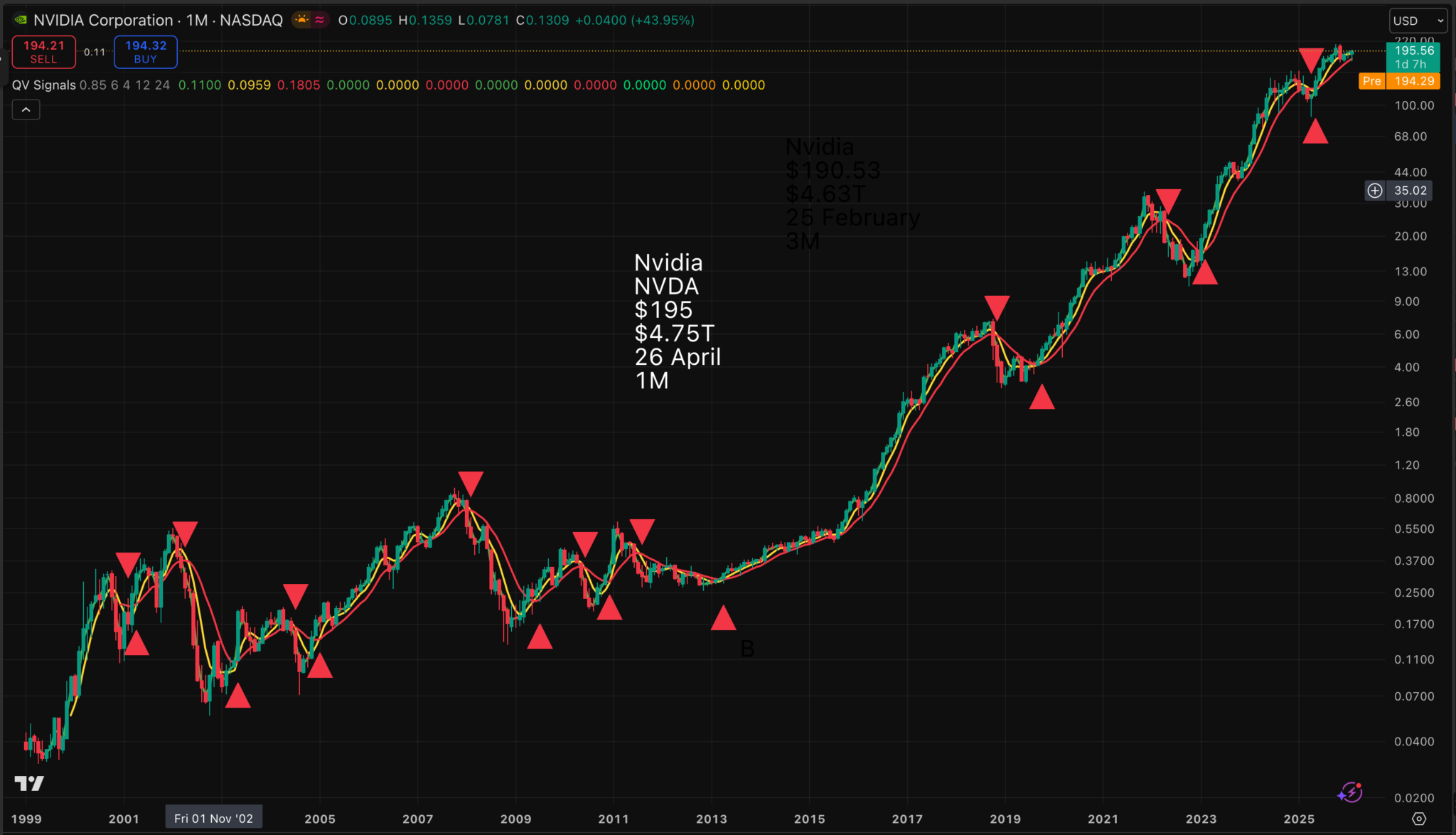
Nvidia’s results were amazing as they have been for years now, but the shares are struggling to react. There are many opinions out there about Nvidia and the durability of the AI data centre boom. They make interesting reading, but ultimately, they are worthless. The future is unpredictable, and the people offering their opinions don’t know what will happen. If they did, they would rapidly become trillionaires.
If I knew that Nvidia shares were destined to rise sharply, I would buy as many as I could lay my hands on, but I don’t. So let us disregard opinions and study indisputable facts.
Nvidia is growing at an extraordinary rate. The data centre business, which dominates Nvidia’s turnover, has grown nearly 13-fold since ChatGPT launched in 2023.
The worry for the shares is that exponentially growing capital expenditure on data centres will strain the ability of their customers to pay for it, and demand growth will inevitably slow down.
Jensen Huang remains positive.
I am confident in their cash flow growing. And the reason for that is very simple. We have now seen the inflection of agentic AI and the usefulness of agents across the world and enterprises everywhere. You are seeing incredible compute demand because of it. This new world of AI, compute is revenues. Without compute, there is no way to generate tokens. Without tokens, there is no way to grow revenues. So in this new world of AI, compute equals revenues.
After that, it gets more technical, but the bottom line is that demand is almost infinite and is effectively self-funding.
So we come to the next fact, which is observable not just with Nvidia but across the stock market. Great figures have lost their ability to drive shares higher, and the slightest shortfall leads to plummeting share prices. This has become a treacherous stock market
Palantir is in a similar position to Nvidia with even more breathtaking fundamentals but the chart has deteriorated further.
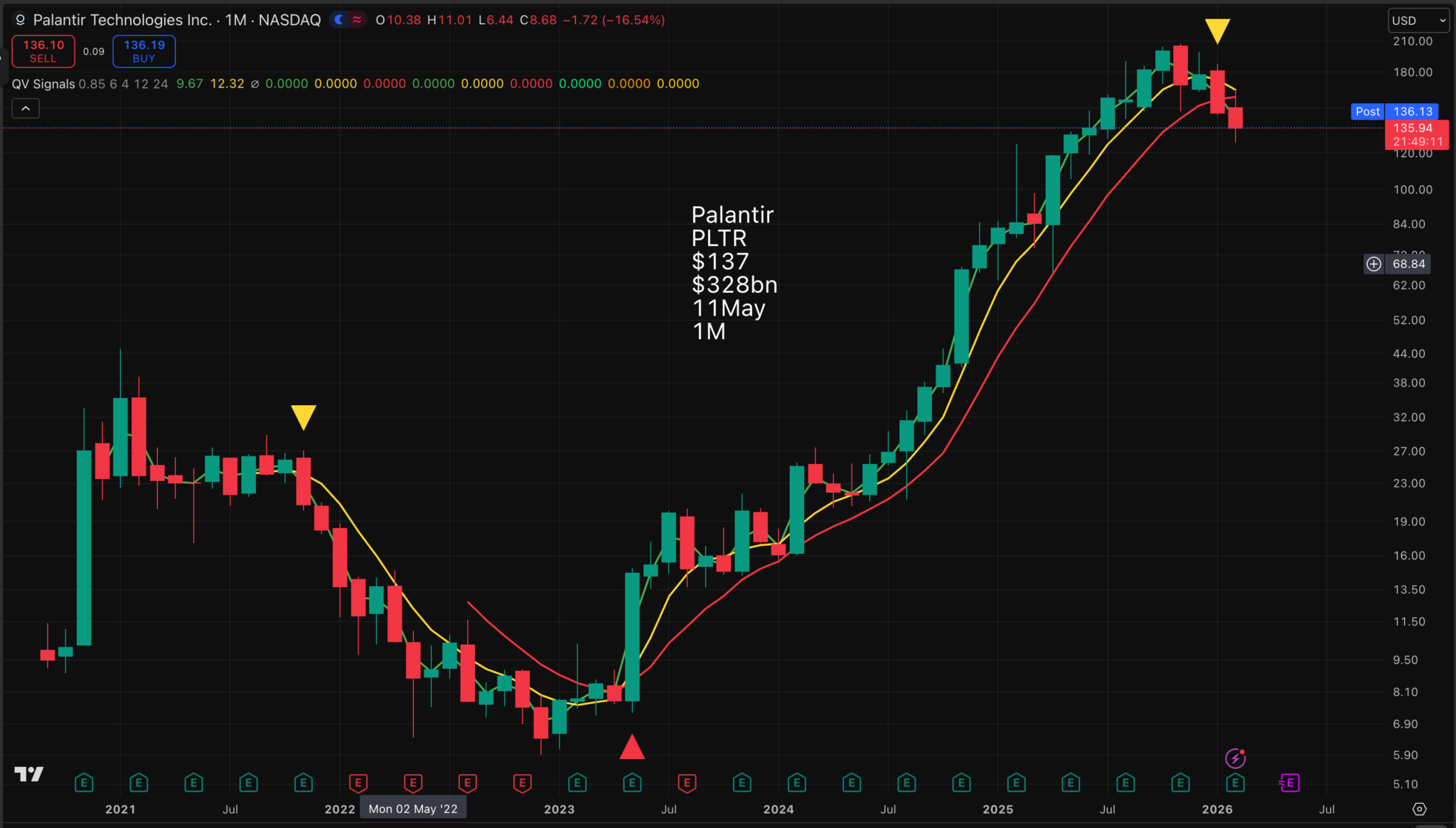
The red line moving average, the longest one, gave an epic buy signal in 2023 and has been climbing ever since, but is showing signs of flattening out. The shorter yellow moving average correctly gave a sell signal in November 2021, has been climbing since 2023 and has recently turned down.
If the red line were to turn down, that would complete the negative picture and suggest that, despite appearances, all is not well in the world of AI.
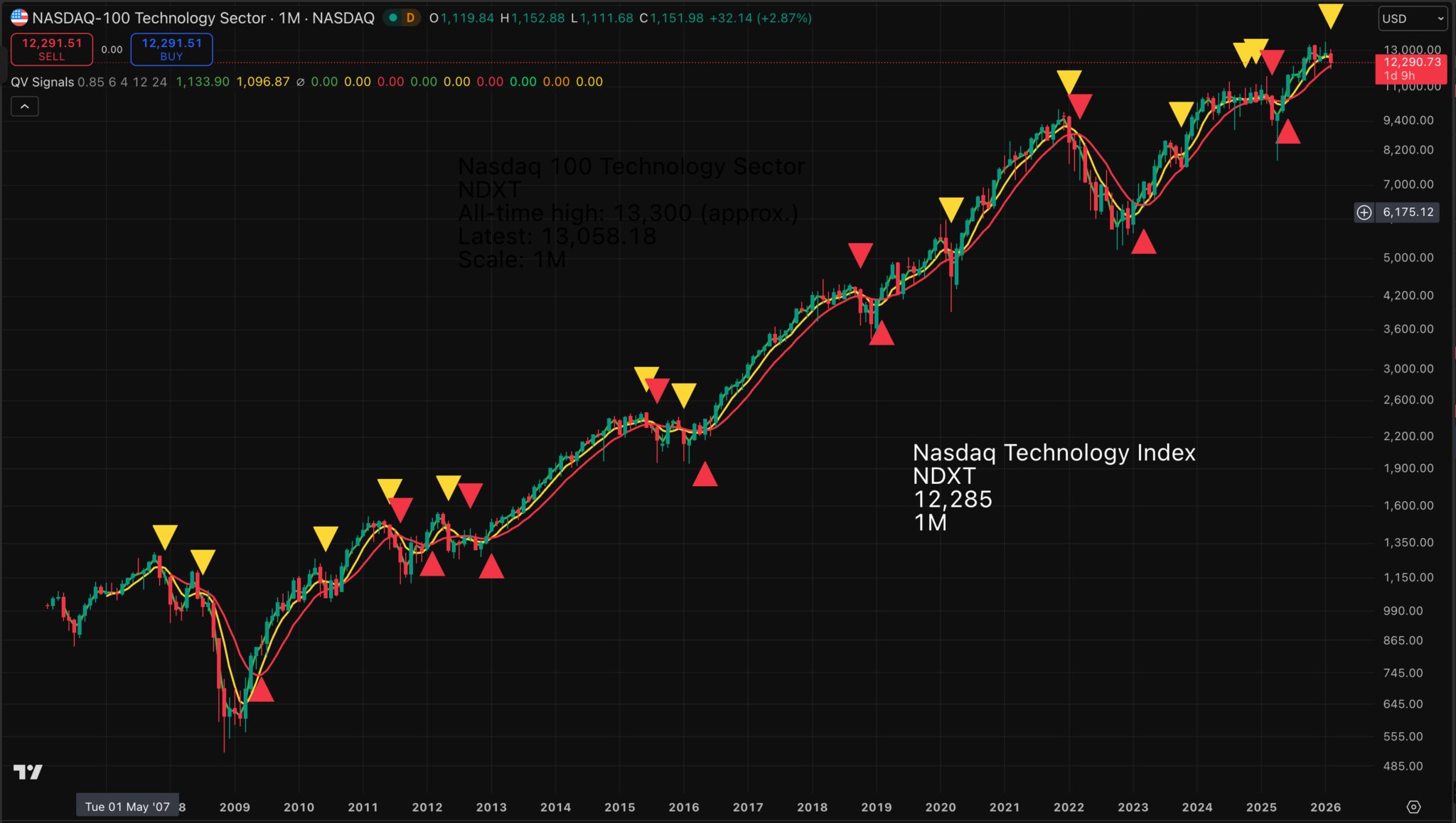
The Nasdaq Technology Index is beginning to look similar with a sell signal from the yellow moving average.
These buy-and-sell signals are not some strange juju magic. They don’t always work, but they are useful. They measure momentum. Shares are a sell when the upward trend loses momentum and vice versa.
There are two things that I would highlight on this chart. First, after a steep decline, red line buy signals (similar to Coppock buy signals) tend to work well. Secondly, signals are sometimes quickly reversed, leading to a cluster of signals. In these cases, it makes sense to wait for the index or share to make a new high before opening new positions.
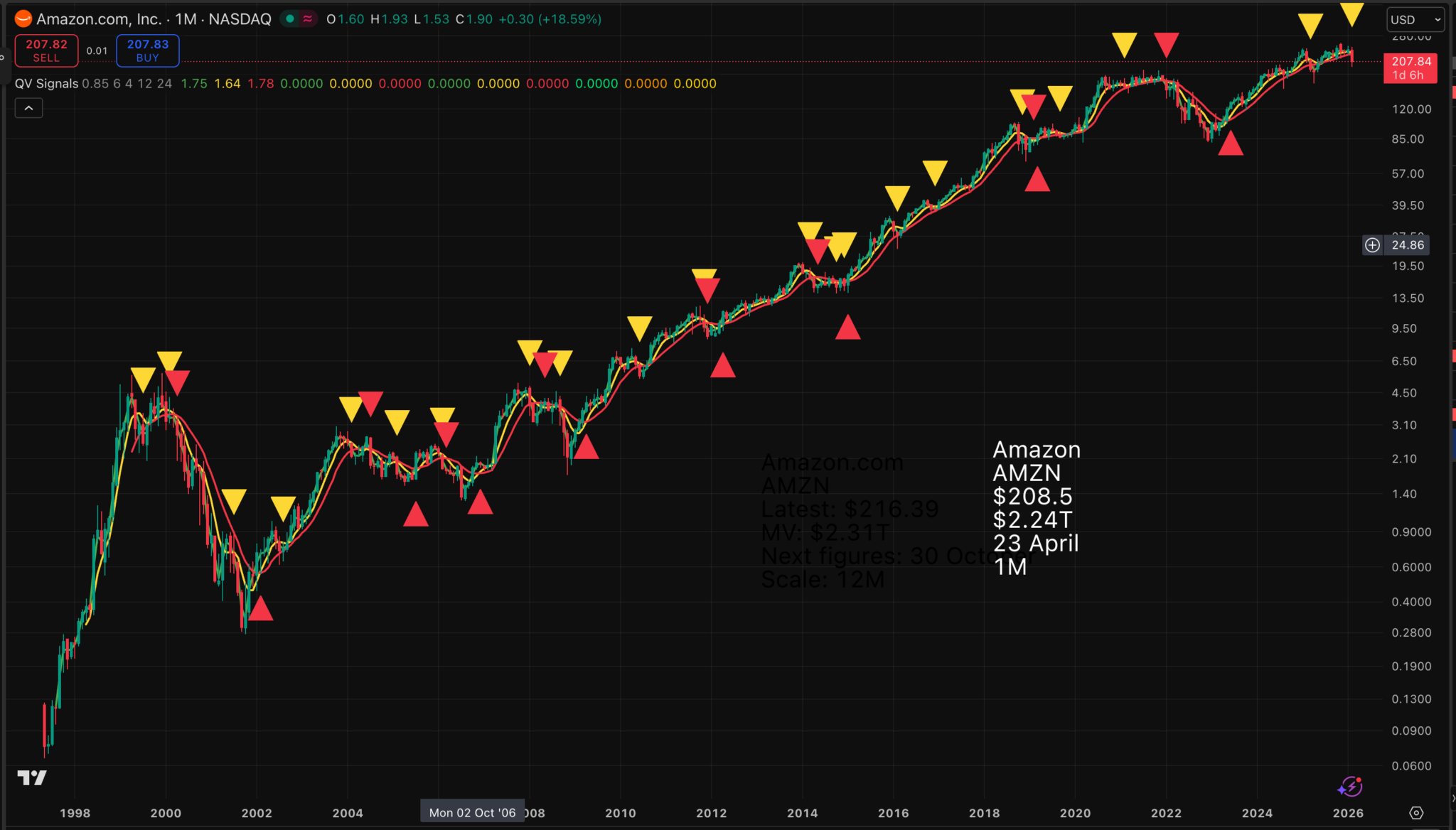
What is striking on the Amazon chart is how well the red line buy signals have worked. The problem with these signals is their scarcity, but when we do have one, they are usually rewarding. A simple strategy for this chart would be to buy on a red line buy signal and sell on a red line sell signal. It looks like a license to print money, at least for this chart.
Presently, we have a yellow sell signal, which is alerting us to the possibility of a red sell signal. Once we have one of those, the scene is set for the next red line buy signal. Adding to the possibility that such a signal will occur is the general fragility across the stock market, especially among shares which had previously enjoyed strong momentum.
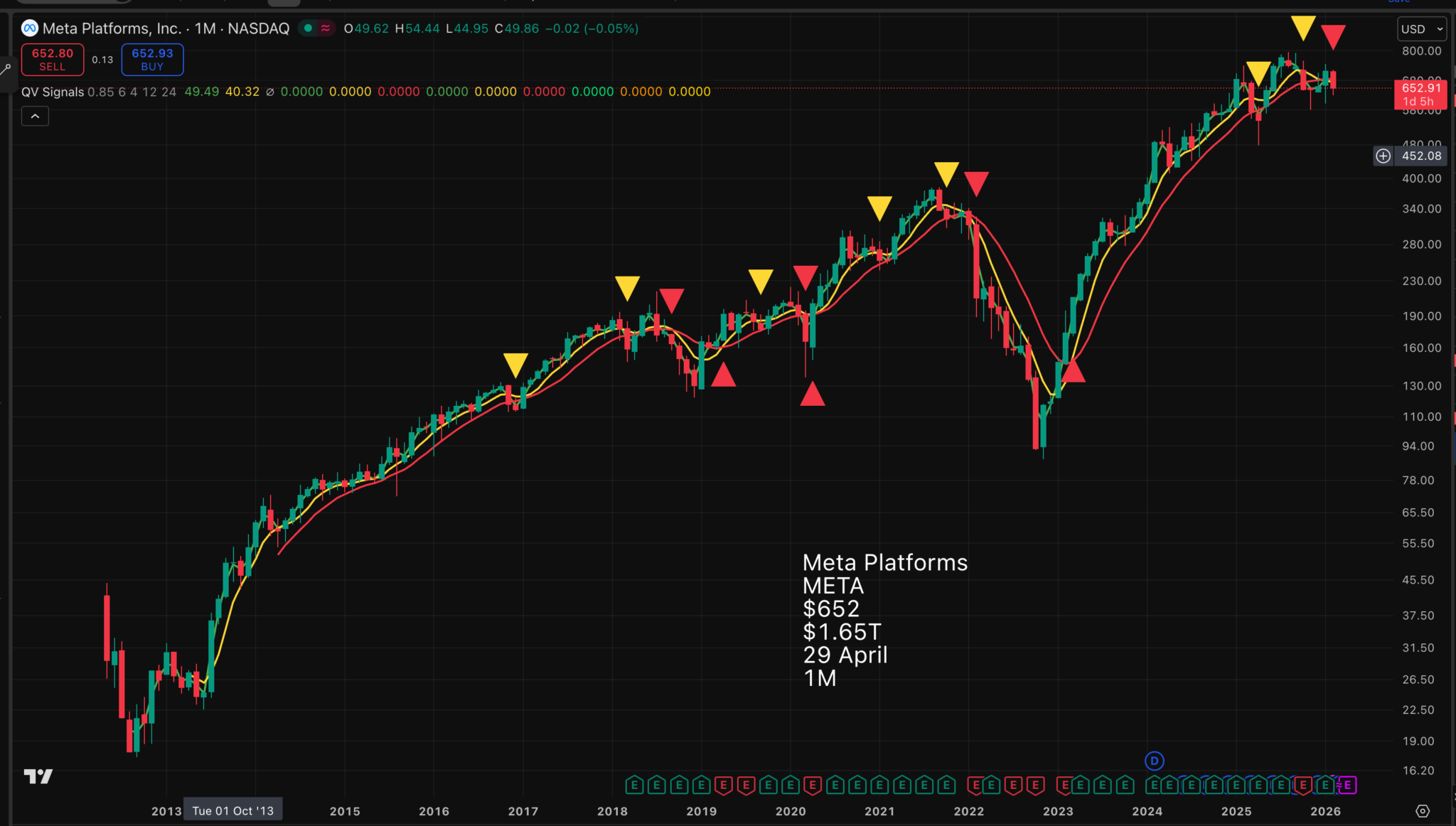
The Meta Platforms chart looks similar except that a red line sell signal has just been given. What we are seeing is that investors are worried that the current orgy of data centre spending is in danger of ending badly with a sharp fall in the return on these investments. This is exactly what the economists tell us will happen. High returns attract high investment, which continues until returns fall back to normal or even disappear.
Cautionary tales were the railway boom in the 19th century, which ended in tears for investors, and the telecoms boom around the turn of the millennium also ended badly. I worry that it is hard to see how Nvidia’s growth can accelerate from here, and there is a growing mismatch between the gung-ho positivism of CEO Jensen Huang and the performance of the shares in the company he leads.
But here I am straying into opinion territory, and what do I know.
Strategy – I Feel Cautious
I don’t have any shares presently because I have been driven out of all the super-exciting shares that I love. My massive leverage means I have to run for cover at the first sign of trouble. Long-term performance suggests that I would often have done better to hang on – buy and forget or even more effectively buy and die, which seems to be a surefire winner, albeit not an appealing strategy.
I am not interested in a stock market in which the only shares doing well are the boring ones.
Most of my effort at the moment is directed at preparing for the next period of opportunity and trying to make sure that I spot the new and emerging winners. A stock market rolling over from boom to indecision or worse is not a great one for my style of investing, and I don’t want to start making recommendations unless I believe in them, which means I have strong, hopefully rock-solid reasons for making them.