The massive AI infrastructure buildout is placing a significant strain on the entire semiconductor supply chain, with one often overlooked component being NAND-based storage. According to Phison Electronics CEO Pua Khein-Seng, the NAND flash shortage could last an entire decade. CEO Pua warned that an upcoming NAND flash shortage is estimated to begin in 2026 and could stretch across the next decade. This claim is much higher than anything we have seen, where these shortages last only a year or two. Speaking in a recent interview, Pua said that the combination of surging AI-driven storage demand and limited recent investment in flash capacity has placed the memory market on a collision course with extended turnaround times.
Pua Khein-Seng put much of the blame on an earlier investment hangover. He argued that after prior cycles where heavy spending led to price collapses, many flash makers pulled back, slowing expansion. He noted that starting around 2023, a significant share of capital was redirected into high-bandwidth memory used for model training, as the margins there were more attractive. As a result, NAND received less focus just when demand began rising again. He also emphasized a shift inside cloud operations from training to inference, adding that inference workloads and model storage create large and persistent requirements for NAND flash. As one of the major controller designers for SSDs, the Phison CEO knows precisely where the demand is headed, many quarters ahead of the public.
That trend is already changing vendor strategies and procurement. New storage modules that place flash closer to the memory bus are emerging, inventories are under pressure, and some suppliers have begun to raise prices or freeze discounts. Pua forecasts that SSDs will capture far more of the bulk storage as capacities grow and pricing converges with hard disk drives, which currently face long lead times. If his decade-long view proves accurate, data centers will need sustained capacity builds and a reallocation of capital toward storage infrastructure. We are left to wonder how quickly suppliers can expand output and where the investment to close a potentially long-term gap will come from. Building a fab is not an easy task, and it remains unclear how eager NAND makers are to expand their capacities when they can enjoy higher profits in the HBM memory segment.
The acute shortage of DRAM and NAND flash memory could shut down many consumer electronics companies by the end of 2026, Phison CEO Chien Chen Pang warned in an interview with Chen Ning Kuan of Taiwan’s Era News. The Phison CEO warns of a “massive die-off” among consumer electronics companies designing cost-effective products that use even the smallest amounts of DRAM and NAND flash components (think TV set-top boxes, Wi-Fi routers, smart TVs, etc). For instance, an 8 GB eMMC chip used in smart TVs rose in pricing from $1.5 in early 2025, to nearly $20 now. Extrapolate this to the vast selection of products priced under the $100-mark, and you can see how component prices could wreck the consumer electronics industry.
Pricing is only half the problem, the other is supply. Memory is now an extremely supplier-driven market, with manufacturers onboarding orders up to three years into the future (i.e. you order now, your DRAM chip reels won’t arrive before 2030. All this said, the crisis could fade by the end of the decade as memory manufacturers build more foundry capacity, and industrial pressure causes geopolitical changes, such as the re-entry of Chinese DRAM and NAND flash companies. Phison is a leading manufacturer of NAND flash-based storage device controllers powering SSDs, flash drives, and memory cards.
CEO Phison
Ten years of memory supply chasing demand. Who knows, but it highlights the possibilities with a new, vastly important customer, AI infrastructure, especially for inference, and maybe afterwards for Agentic AI, having entered the market.
Nobody knows what will be happening in 10 years, certainly not me, but I can easily imagine that the future will develop in a way favourable to the memory companies who supply such critical infrastructure for the AI revolution and will have unprecedented resources to develop their technology, expand capacity in a prudent fashion and reward shareholders.
My reading of what is happening with memory shares is that it is one of the most incredible stock market phenomena that I have ever witnessed.
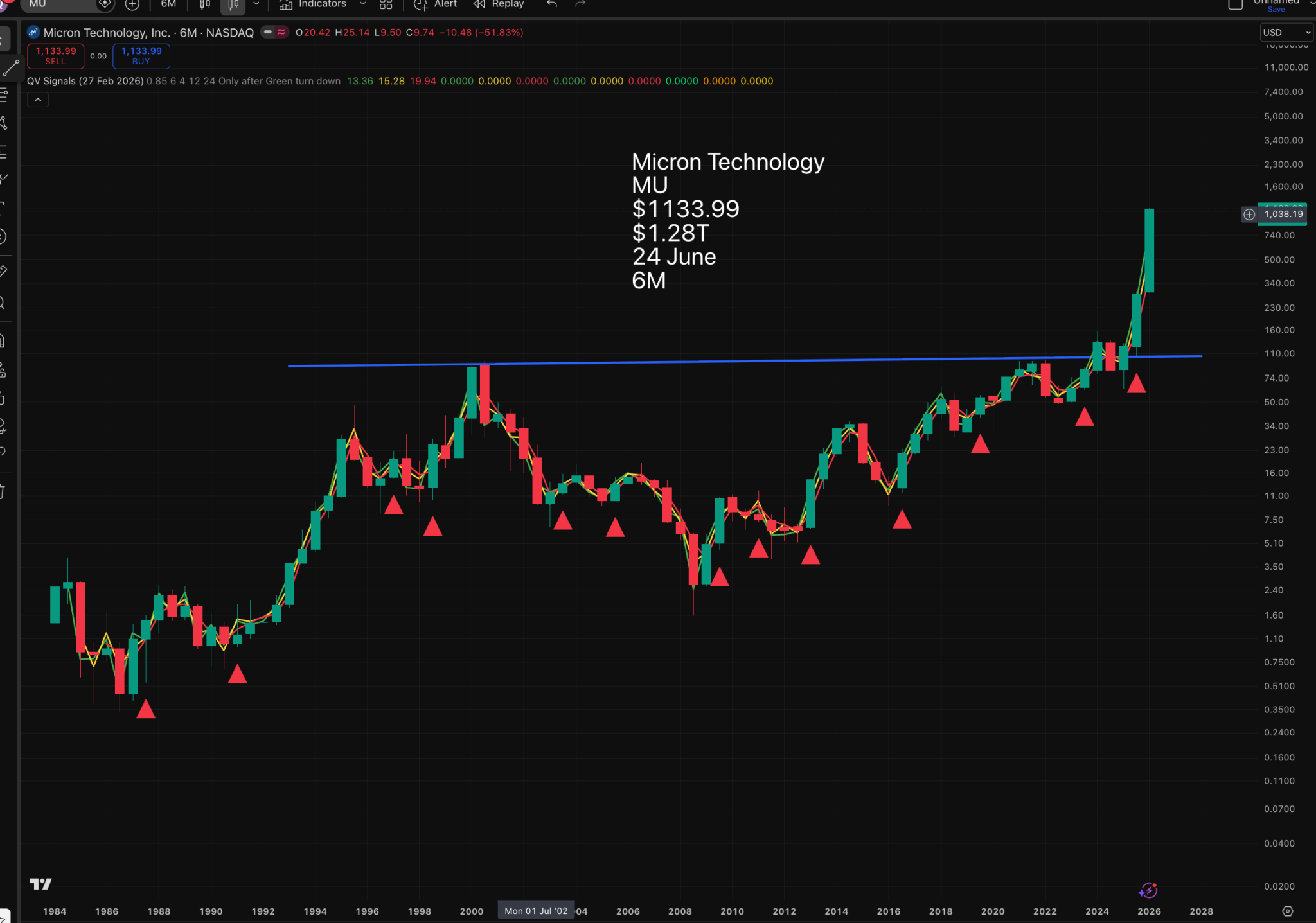
I have flattened this chart to make the point, but this looks to me like blast-off, the beginning of a massive rise, not the end. The shares have already experienced extreme volatility, and that will no doubt continue, but I suspect it will be around a strongly rising trend.
Micron Technology reports on Wednesday, 24 June. The figures and, I imagine, the whole tenor of the report will be super-bullish. Even that may not save the shares from wild gyrations in a world where short-term share price movements are driven by day traders and algorithms, but believers should hold their nerve and even add to holdings.
The same applies across the board to these memory and digital storage companies. They are on one of the greatest rolls in stock market history with no sign of an end in sight. It is the history of extreme cyclicality and a general feeling that what goes up must come down, which is making for so many doubters. A simple reading of the facts and a predisposition to believe what so many CEOs are saying points to a bullish future, a conclusion which I believe is also supported by common sense.
Incredibly, I think there may still be a long way to go in this explosive bull run. The chart below gives the flavour of what is happening at South Korean memory giant, S K Hynix.
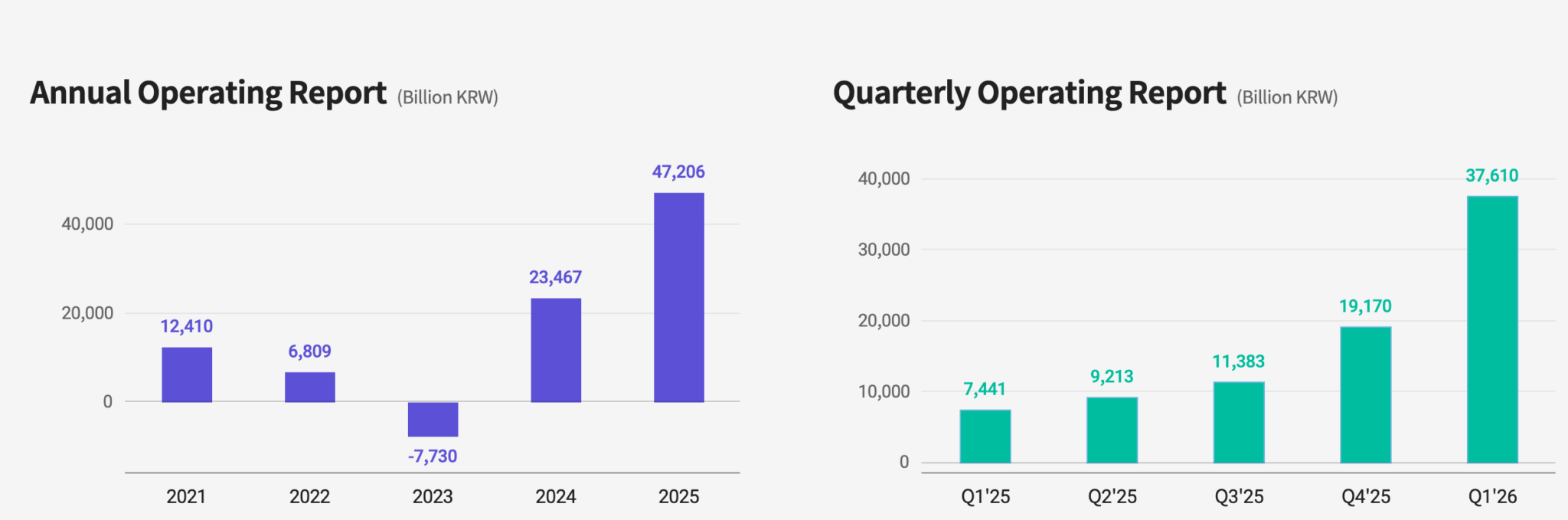
This is incredible. Note that Q1 2026 revenue is not far short of the total revenue for fiscal 2025, which was itself over double the number for 2024. When in history have companies ever grown this fast? With profit margins soaring, reported profits are going berserk.
The analogy that springs to mind is that of the UK farming industry suddenly having to produce enough food to sustain the population of China. How long would it take to achieve any sort of balance between supply and demand? A long time, if ever. The true analogy is even worse because China would need to be supplied, in addition to still supplying the UK population. Memory companies are dealing with massive new demand for data centre infrastructure while still supplying their traditional consumer markets.
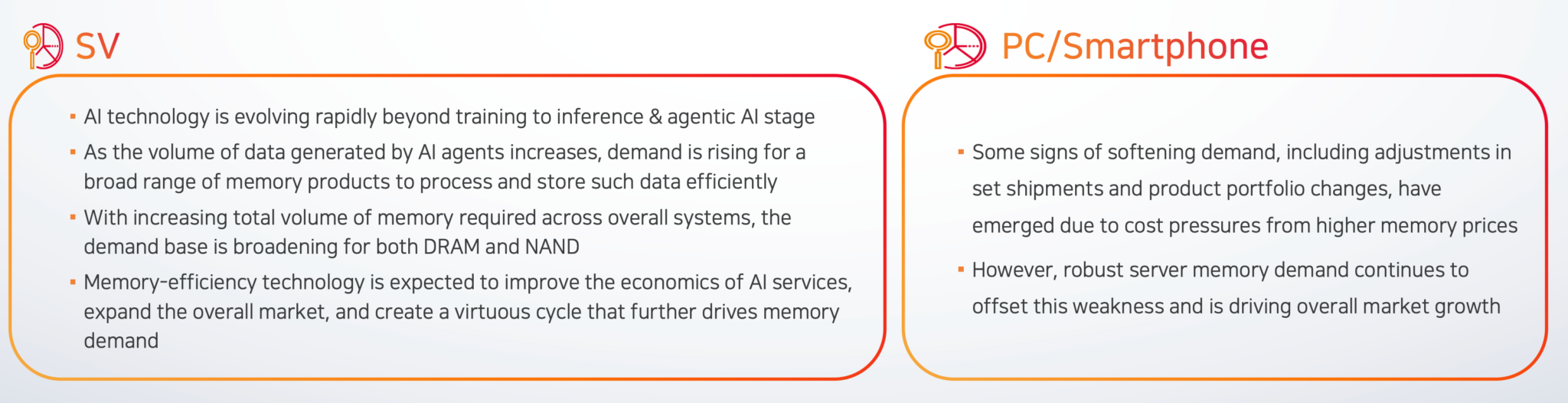
The expectation is that shares in S K Hynix, currently traded in South Korea, will start trading on US stock markets in August. They may be volatile, but history suggests that it could be a good time to start building a position. SK Hynix is all about memory, and it is an amazing company.
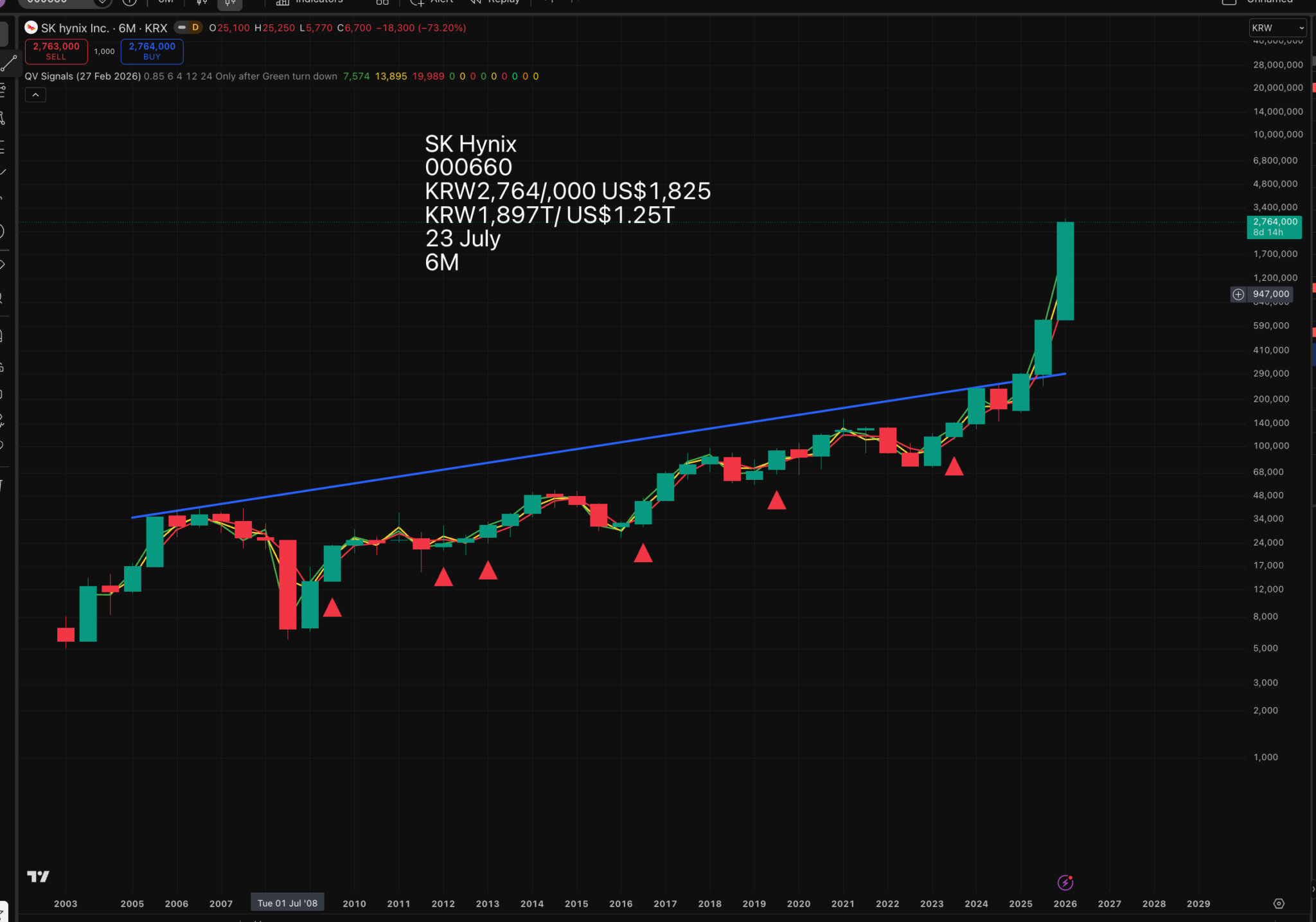
This is another fantastic chart, very similar to the one for Micron Technology. Think about what is happening. These companies were supplying relatively simple products to consumer markets, but still complicated to make because fabs and cleanrooms are sophisticated technologies.
Suddenly, their big market is not consumer products but critical infrastructure in the greatest investment boom in history. Talk about a game changer. It is like the transition of Netflix from supplying DVDs to streaming its own content, a total transformation of the business, which drove a share price rise of 2,371 times over 20-odd years.
The moral of the story is that when everything changes, everything changes.
Share Recommendations
Buy memory shares ( all the usual suspects), including the ones mentioned above