
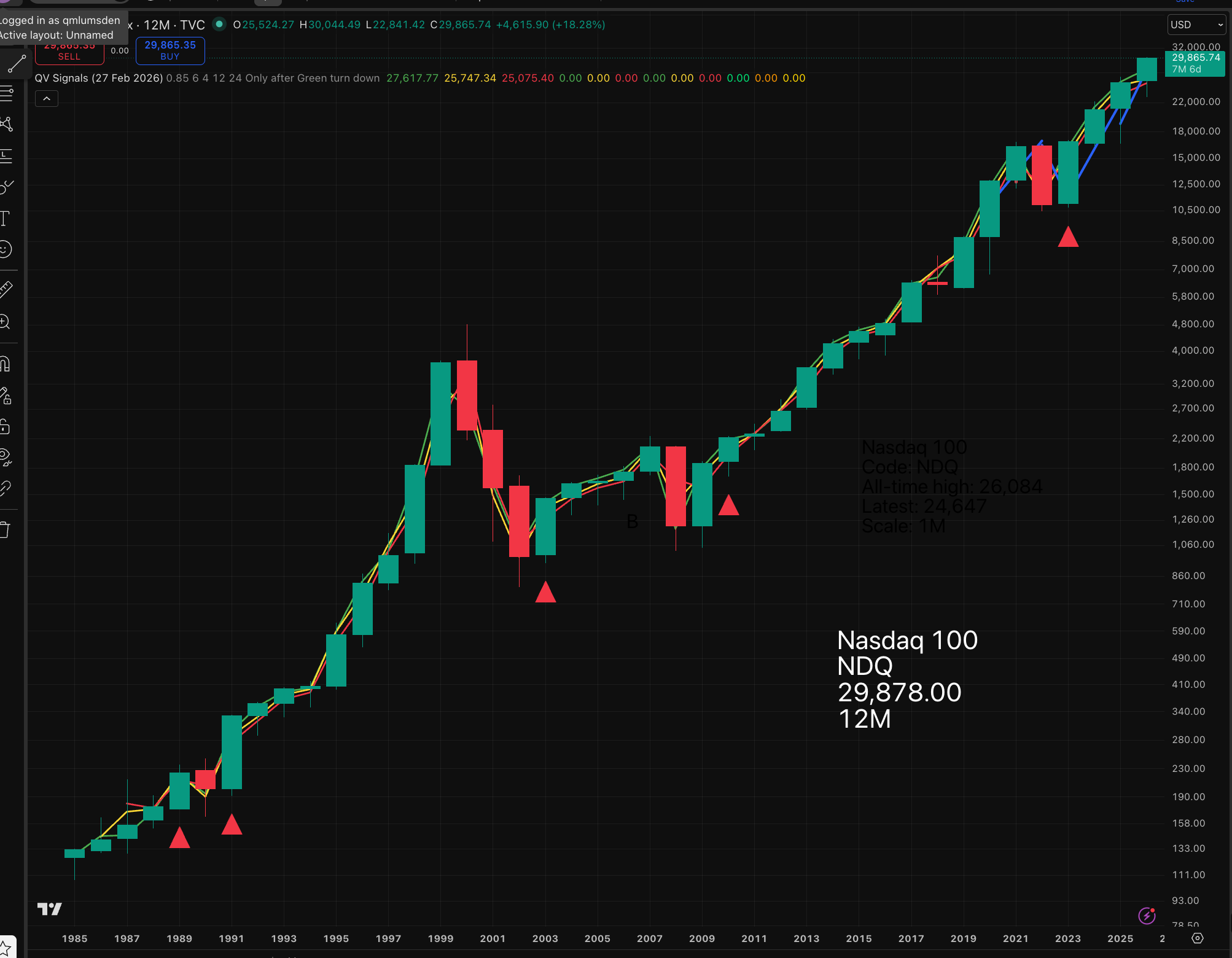
As befits a soaring stock market, there are loads of shares looking exciting. I could bury you in recommendations, but that is not something I want to do. I prefer to recommend fewer shares, hopefully really exciting ones, and keep plugging them. You only need a few winners, even just one, to make big profits. No need to go mad.
The key to what is driving the US stock market is the AI revolution and the associated build-out of computing infrastructure. It turns out that data centres don’t just need Nvidia’s GPUs, they need memory, they need networks, they need cooling, they need energy, they need plumbers and electricians, they need building, they need maintenance, they need a ton of stuff.
They even need challenges. This stuff is not being built for show. The plan is to change the world, reach for the stars, put autonomous cars on our roads, answer mankind’s deepest mysteries, cure cancer, put a robot in every home, automate our factories, and amplify our imaginations with access to bottomless quantities of data.
As I mentioned in an earlier alert, one analyst at BlackRock, the fund management giant, believes that AI is rewiring the world and the stock market. These are incredibly exciting times, which is why I am waiting for AI to come up with the secret of eternal life. I don’t want to die with all this going on.
I think maybe the most important thing investors can do at this juncture in the stock market is have faith, believe that this is the big one, that humanity is at an early stage of making a great leap forward. Pick stocks to buy that tick all the boxes, and every time they swoon, as they will from time to time in a market dominated by day traders and computer-driven trading rules, buy more. Be the guy who laughs longest and laughs last.
Stock markets and individual shares climb a wall of worry. Every time a share you hold dives, ask yourself if anything has changed. If it hasn’t, don’t panic; they will recover and resume their upward march.
Here is a crazy idea for you. Set up a spread betting account. Buy an exciting share or several on leverage. Build a worthwhile holding. You will know what works for you depending on your circumstances and your risk appetite, but I am imagining something in six figures. When it reaches that level, stop buying. If needed, and if there has been no important change in the fundamentals, try to defend that holding.
This is where the fun begins. If the shares keep climbing, delivering exciting gains while allowing the leverage to fall to less risky levels, you can start taking money out to buy stuff. I am going through a phase of buying myself designer clothes. It is amazing fun when I buy kit from my favourite designers, Brunello Cucinelli, John Amiri, MMY, and John Smedley, as well as less expensive options like linen shirts from Uniqlo.
What is cool about this is that you don’t have to sell shares to buy stuff, just use the funds available button on your IG account to transfer funds into your bank account. If all goes well, it is like you have your own printing press.
If you have chosen wisely, as Indiana Jones did in the famous scene with the zillion-year-old Templar Knight in Indiana Jones, then profits on your shares should make all your purchases effectively free. If you are still stunned by the prices and Brunello Cucinelli is mind-blowingly expensive, look at a platform called Vestiare Collective, where this designer kit, sometimes new, sometimes second-hand, turns up at a fraction of the original price.
When I was much younger, I planned to live my whole life like this, buy shares, borrow against the profits and live like a king without really having to work. To a considerable extent, it is exactly what I have done. It makes great sense, especially if you can find a way of holding shares where the gains are tax-free.
Memory boom in full spate.
Memory-chip makers SK Hynix and Micron Technology have joined an elite group of companies with market values exceeding $1 trillion amid the artificial-intelligence-driven chip boom.
Shares of the world’s second-largest memory-chip maker SK Hynix have more than tripled this year. On Wednesday, they closed 9.3% higher, bringing the South Korean firm’s market capitalization to 1.599 quadrillion won, equivalent to $1.061 trillion.
On Tuesday, Micron also reached the $1 trillion market-cap milestone, with its stock jumping 19% to close at $895.88. UBS analyst Timothy Arcuri raised his 12-month price target for the U.S. chip maker threefold to $1,625, while increasing his sales and earnings estimates for 2027 through 2029.
As the global AI infrastructure build out continues, chip makers stand to benefit from tighter supplies of high-performance computing chips and higher prices for memory products.
SK Hynix became the second South Korean company to cross the $1 trillion market-value threshold after the world’s largest memory-chip maker Samsung Electronics, which surpassed the mark earlier this month.
The two South Korean companies trail the world’s largest contract chip maker, Taiwan Semiconductor Manufacturing Co., Asia’s first trillion-dollar company.
Memory chips have recently emerged as some of the world’s most profitable products, with investors piling into the tech sector as chip demand is unlikely to cool anytime soon.
SK Hynix–alongside its home-country rival Samsung and U.S.-based Micron–dominates the world’s advanced AI memory-chip market led by Nvidia.
SK Hynix, which has led the high-bandwidth-memory market by developing and supplying HBM3 and HBM3E products to Nvidia ahead of its rivals, in April posted a fivefold jump in quarterly net profit on surging demand.
Net profit surged around 400% from a year earlier to a record 40 trillion won for the three months ended March, well above street views, with both revenue and operating profit also rising to quarterly records, according to SK Hynix.
Memory chips act like fuel lines for computing engines. As AI processors from Nvidia and others grow more powerful, they require more memory, including both conventional chips and advanced high-bandwidth memory.
SK Hynix executives have said that they expect chip demand to continue outpacing supply over the next three years, especially for HBM products.
Mirae Asset Securities analyst Kim Young-Gun said Wednesday that undersupply in DRAM and NAND–the two main memory-chip types–is expected to continue through 2028. Kim raised his target price for SK Hynix by 19% to 3.8 million won (US$2,359), expecting the average selling prices of the company’s DRAM and NAND products to rise 184% and 231%, respectively this year.
The company continues to ramp up investment to boost production capacity, as customers are scrambling to secure available supplies of cutting-edge semiconductors for AI data centers, smartphones and other devices.
It is planning to list in the U.S. this year as it raises funds for investments to meet demand for advanced chips driven by the AI boom.
SK Hynix said in March it had filed an application with the Securities and Exchange Commission to list American depositary receipts. A U.S. listing could attract more global investors to help fund the company’s ambitious investment plans.
I guess that, as understanding grows of the spreading scale of the AI infrastructure boom and the durability of demand for ever-higher-performance memory chips, this group of stocks (Samsung, S K Hynix, Micron Electronics, SanDisk, Kioxia, Seagate Technology Systems and Western Digital Corporation) will keep exploding higher.
I keep reading mixed views on memory stocks including SanDisk stressing that they are vulnerable to a cyclical peak in prices and a sharp downturn. For many observers it seems to be just a matter of determining when this will happen.
I suspect this attitude fails to understand what is happening. As in other fields it is all about AI, the massive ‘something new’ which has hit the memory market. As recently as a year ago SanDisk hardly had a data centre business and its relatively static consumer business was a far bigger percentage of total sales; that is changing fast.
Both the extension of our joint venture with Kioxia and the supply agreement for DRAM following our investment in Nanya further strengthen our supply chain resiliency. This leverage is enabling us to drive stronger customer engagement, allowing long-term conversations with partners who value technology performance and long-term supply assurance. With increased engagement and optionality across the portfolio, we can optimize our end-market mix more effectively. Together, these transformations have resulted in a step change in what we believe to be sustainable gross margins, free cash flow generation, and earnings power in a market that we expect to grow in the double digits for the foreseeable future.
Data center is a clear example of this strategy in action, with revenue growing 233% sequentially. This milestone reflects years of preparation and our deliberate shift toward what is now the most strategic and fastest-growing end market. While we have made substantial progress, there are significant growth opportunities ahead driven by the fundamental shift in underlying infrastructure requirements of artificial intelligence. We are witnessing extraordinary growth not just in model size, but in resulting token generation, the duration and complexity of model runs, and the increasing importance of context.
As AI models scale from billions to trillions of parameters, and deployments advance from simple inference to deep reasoning in increasingly autonomous agentic systems, NAND has become a critical component of the underlying infrastructure. Inference optimizations such as KV cache, along with workloads like RAG (see below), require substantial high-performance, low-latency flash to deliver real-time responsiveness and quality of user experience. These workloads expand the amount of data that now needs to be stored on low-latency flash well beyond the model itself, as systems must retain context, intermediate data, and large external data sets.
As a result, NAND flash is emerging as the only economically viable solution to deliver the capacity, performance, and efficiency required to keep models accessible for real-time inference at scale. This shift in understanding the critical nature of our technology comes at a time when our product differentiation is strongest, anchored in what has been recognized as an industry gold standard for NAND technology with BiCS 8, and a broad, leading portfolio with TLC [triple level cell] and QLC [quad level cell] offerings. We are confident that our world-class product portfolio and technology leadership will continue to drive data center customers to see Sandisk Corporation as a partner of choice over the long term, and we are already seeing that preference translate into results.
SanDisk’s data centre business grew 233pc not from a year earlier, but sequentially, from the previous quarter. From almost a standing start data centre revenue is $1.5bn, almost 25pc of total revenue of $6bn. At this incredible rata of growth SanDisk will become a data centre business in no time and that will be very valuable.
SanDisk shares are climbing so fast for two reasons. They were a rather boring, rubbish business dominated by a slow-growing cycical consumer business so the company was valued at rubbish levels, as noted in a previous alert. Almost overnight a cygnet is becoming a swan with sales dominated by high tech, high margin, explosively growing data centre sales.
This is a total transformation and the shares are exploding higher as investors try to value this new reality. It is surprisingly similar to the effect when a relatively unknown oil exploration company drills down and finds a giant new oil field. Everything changes.
Analysts keep talking about the huge change in price and feeling it must have gone too far but what is too far in this case when a share is going from zero to hero. Thanks to the unfolding and insatiable AI revolution memory companies have won the lottery.
Share Recommendations
All the memory companies mentioned above (the usual suspects), the faster growing the better.
An explanation of RAG.
RAG stands for Retrieval-Augmented Generation. It is an AI framework that grounds Large Language Models (LLMs) in external, real-time data to make their responses more accurate, fact-based, and domain-specific.
Think of a standard LLM like a “closed-book exam”—it can only answer questions using the static, historical data it was trained on. RAG acts like an “open-book exam,” pulling relevant facts from your specific documents and passing them to the AI so it can answer with pinpoint accuracy.
How RAG Works
A RAG system automates the following steps to fulfill your requests:
- Indexing & Embedding: External data (e.g., internal company policies, PDFs, or databases) is split into chunks and stored in a vector database as mathematical representations of their meaning.
- Retrieval: When you type a query, the system uses semantic search to scan the database and pull out the exact pieces of text that are most relevant to your question.
- Augmentation: The system takes your original prompt and appends the retrieved documents to it, creating a rich, context-aware prompt.
- Generation: The language model reads the augmented prompt and synthesizes a highly accurate, cited response based specifically on that external data.
- Why RAG is Crucial in Tech
- Reduces Hallucinations: Because the AI relies on a specific dataset, it is less likely to confidently invent facts or recommend nonexistent sources.
- No Expensive Retraining Required: You do not need to spend huge amounts of compute and money to fine-tune an AI model. You simply update the data in your retrieval system.
- Real-Time Data Access: You can give an AI access to data that is updated daily or hourly, bypassing the problem of static AI knowledge cut-offs.
- Access to Private Data: It enables organizations to build internal copilots that can read private emails, chat logs, and SharePoint documents without exposing sensitive information to the public web.

Pick One Great Stock (From The AI Trade) And Buy The Buy Signals/ $-Cost Average

The Power Of The Cross – Time To Buy

Cryptos Waking Up