
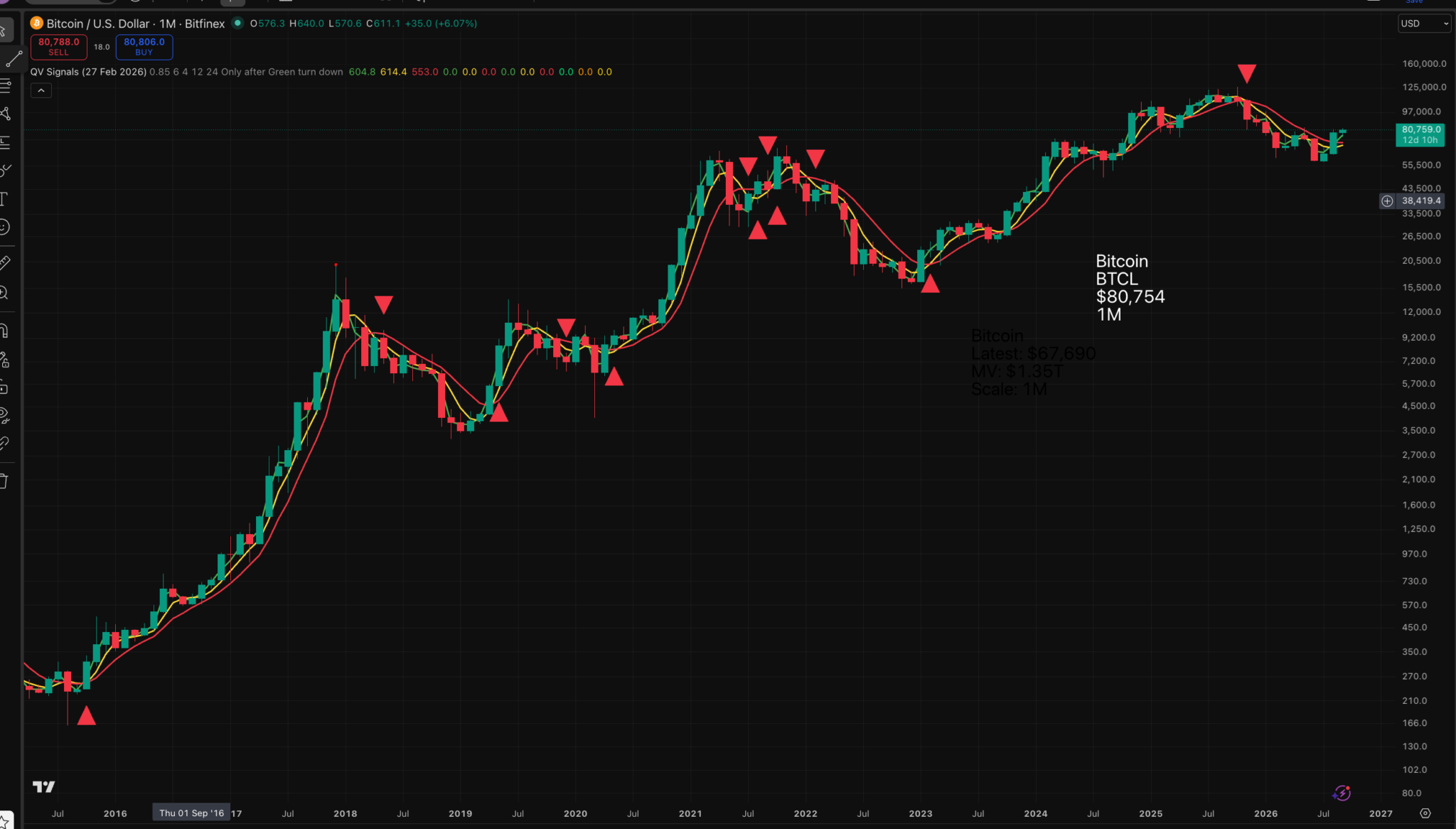
We are close to a red-line moving average buy signal for both Bitcoin and Ethereum. These buy signals would be positive for crypto and, most likely, for the whole stock market.
I’ve kept a relatively low profile recently because of the noticeable loss of upward momentum in the AI trade. The fundamentals have continued to improve, but the shares seem to be exhausted, at least in the short run. Every time they head higher, they run out of steam and fall back. I suspect this is a temporary phenomenon and there are more outstanding gains to come.
One which is racing ahead is the recently recommended Dell Technologies, which is attracting a growing crowd of investors inspired by its AI success and exciting prospects.
What is happening- all these wild ups and downs- further reinforces the case for £-cost averaging as a strategy. I am keen that, for both subscribers and myself, every trade should be a winner, and £-cost averaging with shares in companies with strong balance sheets and strong cash flow is a way to make that happen.
I could look around for other shares to recommend, and I am sure I would find some. This is much like what the other services do, so they have something to write about every day. But I don’t want to do that; Quentinvest is all about making money, and you don’t need loads of shares to do that; just a few really good ones.
At the moment I am obsessed with the AI trade. AI is by a distance the most exciting thing happening in the world today. Some people think it may be the most exciting thing that has ever happened in the history of mankind, a singularity after which nothing will ever be the same. Why on earth would you want to buy shares in a company selling cashmere sweaters, however wonderful, when you can buy shares in a company facilitating the greatest transformation in the history of homa sapiens?
As we know, shares in these exciting companies, what I call the usual suspects, NVDA, MU, SNDK, AMD, DELL, and co., are expensive or at least have enjoyed huge rises in recent times, which makes them super volatile; hence my enthusiasm for £- cost averaging.
Strategy – Find Great Shares, Buy Every Month
The above is what I call my win-in-the-end strategy. Shares can be almost unbelievably volatile if something in the macro picture is negative, but they get there in the end. Between December 1999 and November 2001, Amazon shares lost 95 per cent of their value. For most people, the strategy for Amazon shares was all about selling, protecting a fast-shrinking profit and avoiding steep losses.
But some people looked at the fundamentals. Amazon never stopped growing, and in 2001 even made a maiden profit. Bezos never budged in his conviction that his business would be a huge success, and anyone who used the plunging share price to $-cost average the shares ended up a massive winner.
Key to Amazon’s success was its ambitions as a disruptor. Millions of books have been published. How many. of them are stocked at your neighbourhood bookstore, a tiny fraction, but Amazon had no such limitations and with no expensive shop rents to pay, it was hugely competitive on price as well, even before it launched the Kindle, which is the only way I read books now. Even if I own the book, I prefer to read it on a Kindle.
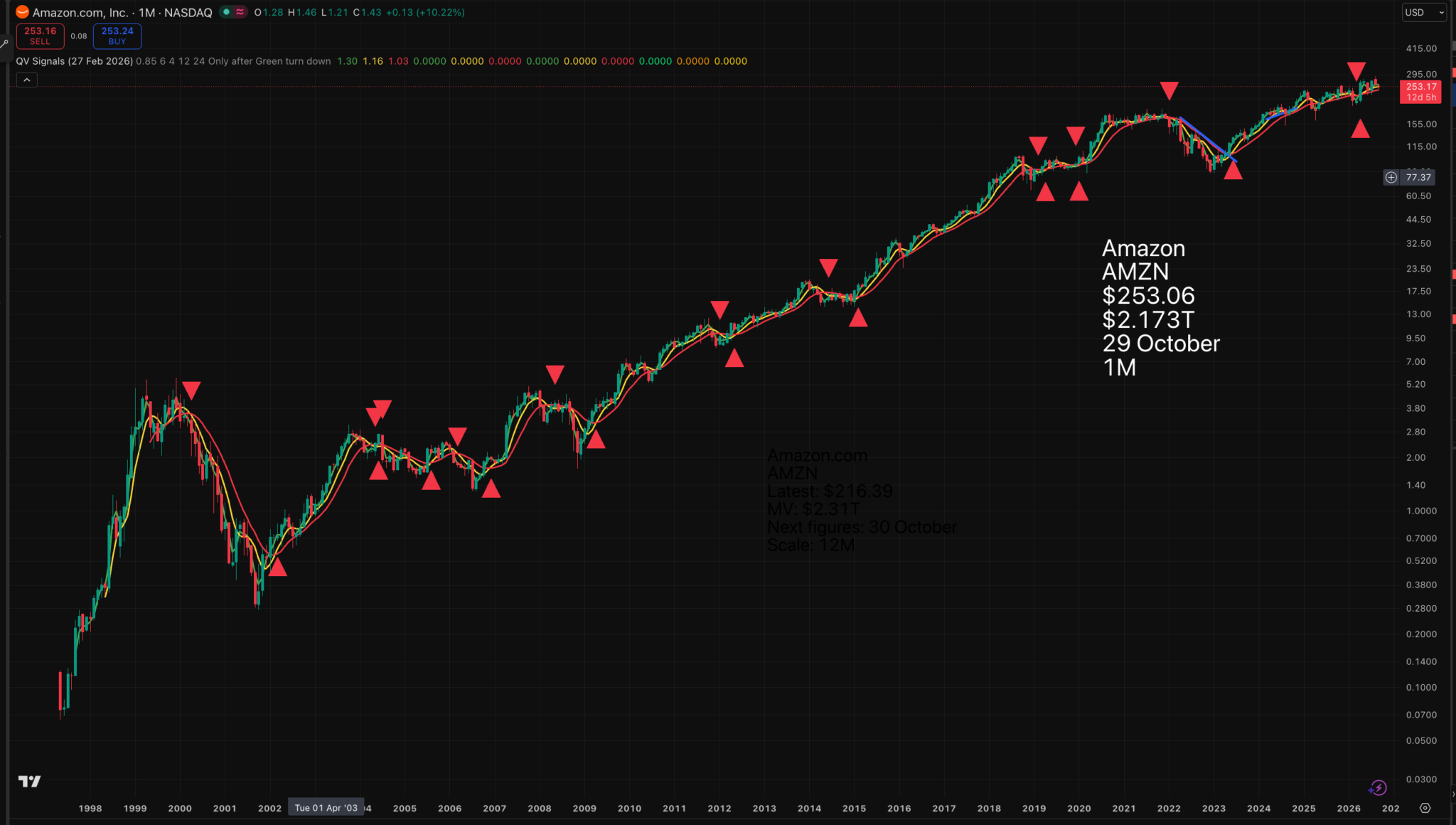
In November 2001, Amazon shares fell to a low around 25 cents, adjusted for subsequent share splits. The latest price is over $250. What a game changer those shares would have been for anyone who decided to $-cost average buy them, even if they had started in 1999, before the shares peaked at $5.58.
So would you have been smart enough to choose Amazon shares for a $-cost averaging programme? You might if you thought about the story and listened to what Jeff Bezos was saying. Once you start dollar-cost averaging, the main thing is to do it with an exciting company with a fantastic future.
An obvious example now is SpaceX. Are the shares insanely overpriced? I have no idea. But what I do know is that space exploration and putting satellites in space is a super-exciting business. Ten or 20 years from now, who knows what amazing things SpaceX might be doing? Maybe along the way the company will be blindsided by some dramatic technology shift, but if that happens, they will adapt. That is what humans do and have done since time immemorial.
Is it safe to combine $-cost averaging with leverage? Good question. My printer’s son, who did so well with his averaging programme, did not use leverage and made phenomenal returns.
There are two ways you could consider for using leverage. One is to invest only cash, never paper profits, so if your shares are appreciating in value, your leverage will fall over time.
The other is to go flat out on leverage, but with my most reliable selling rule. Whenever you think to yourself – My goodness, I am doing really well,- sell everything. My experience is that this is an almost infallible rule, but it needs enormous willpower to implement. If you are that man, you could try it.
Once you have sold, beware of sellers’ remorse. If the shares you have sold keep climbing, you will feel an overwhelming impulse to repurchase them. You must not do this because a sell-off is coming.
Meanwhile, I am waiting for a more reliably exciting market to become more active on the alerts’ front.

Pick One Great Stock (From The AI Trade) And Buy The Buy Signals/ $-Cost Average

The Power Of The Cross – Time To Buy

£-Cost Averaging And The AI Trade