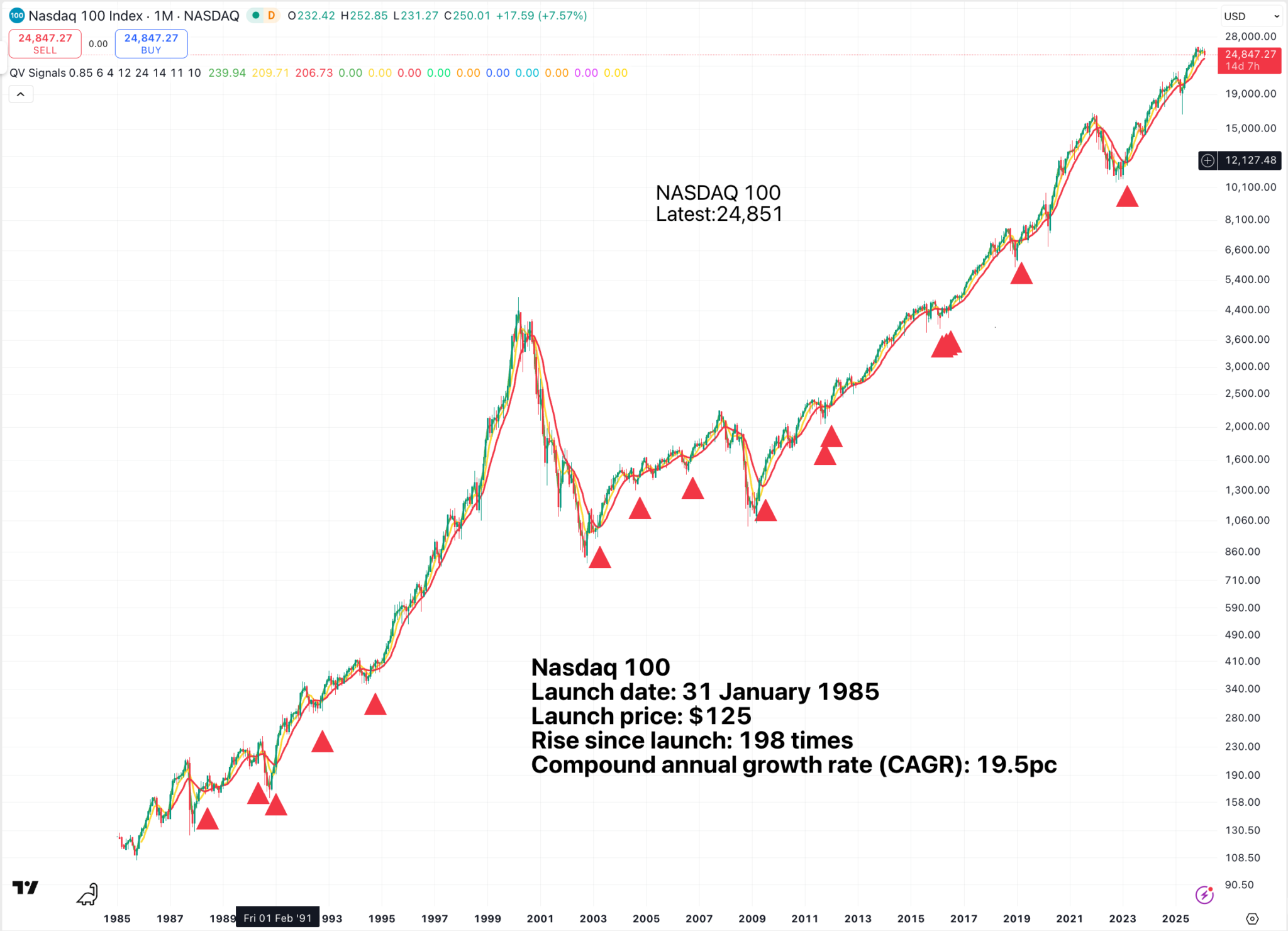
Before I talk about red line investing, take note of the performance of the Nasdaq 100 index since it was created in January 1985. It is up nearly 200 times and has been compounding annually at a rate not far short of 20pc. This is a staggering performance.
Red line investing is based on my longest period moving average, which is a red one. On this chart, we are particularly concerned with buy signals. As you can see, they are good with the signal, repeatedly, followed by a sustained rise in the index.
They are not ideal for somebody sending our regular alerts, often daily, because these great buy signals tend to be rare. The last one was in March 2023. I believe we can derive sell signals from these charts too, but more on that in future alerts.
Sell signals are important because, in their absence, we have the reassurance to stay invested.
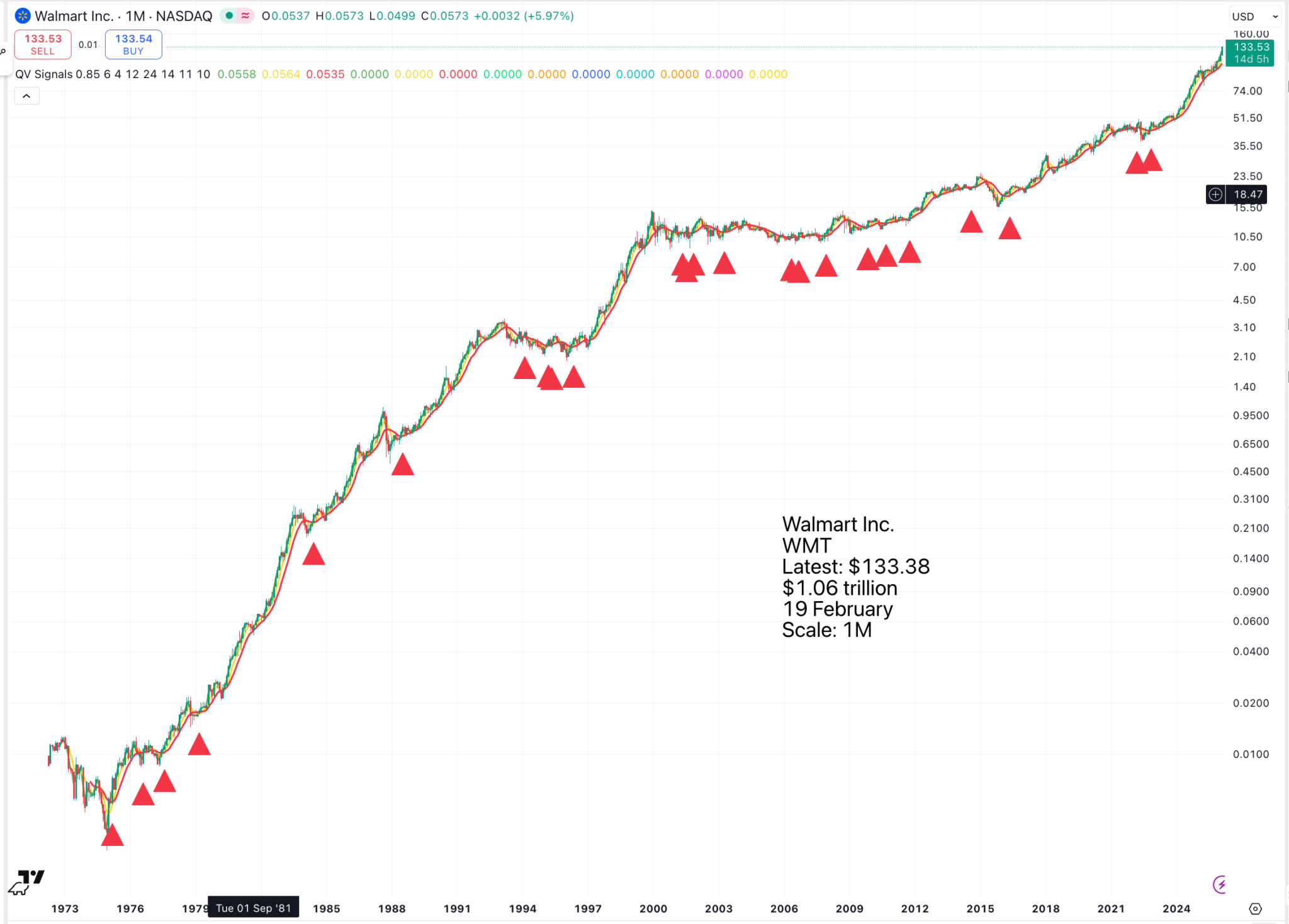
Wal-Mart is looking good. Apart from some excellent buy signals, there are periods when there is a bunching of buy signals. This is a characteristic of a consolidating share price. Here we need another signal. We need the shares to move decisively into new high ground, otherwise money can be locked up for years in a share which is going nowhere.
Here, in a nutshell, is why Walmart shares are doing so well.
Walmart (WMT) shares are experiencing a strong, historic rally—approaching a $1 trillion market capitalization—due to a fundamental transformation from a traditional brick-and-mortar retailer into a high-margin technology-driven, omnichannel powerhouse. Investors are rewarding the company for consistently outperforming competitors, with the stock up 179% over the past three years.
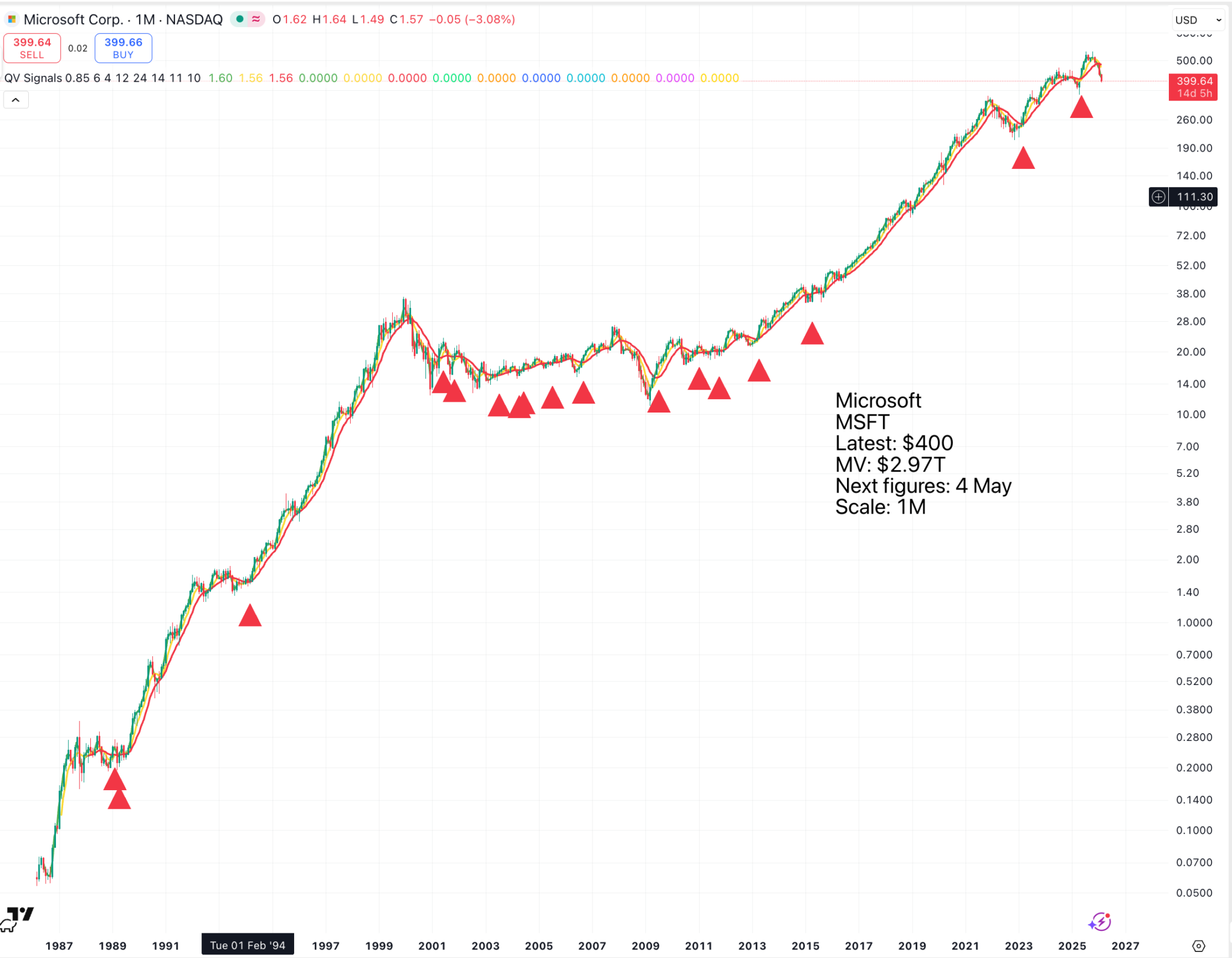
The Microsoft chart does not look so good, though, after such a sharp decline, they are oversold. The red line has turned down, indicating a significant loss of momentum in the shares. Past buy signals have been excellent. There was a long period of bunched signals when investing in the shares would have been dead money. Again, the trick was to wait for a decisive move to a new high.
AI is having a bit of a wobble presently, but the charts suggest it is by no means game over.
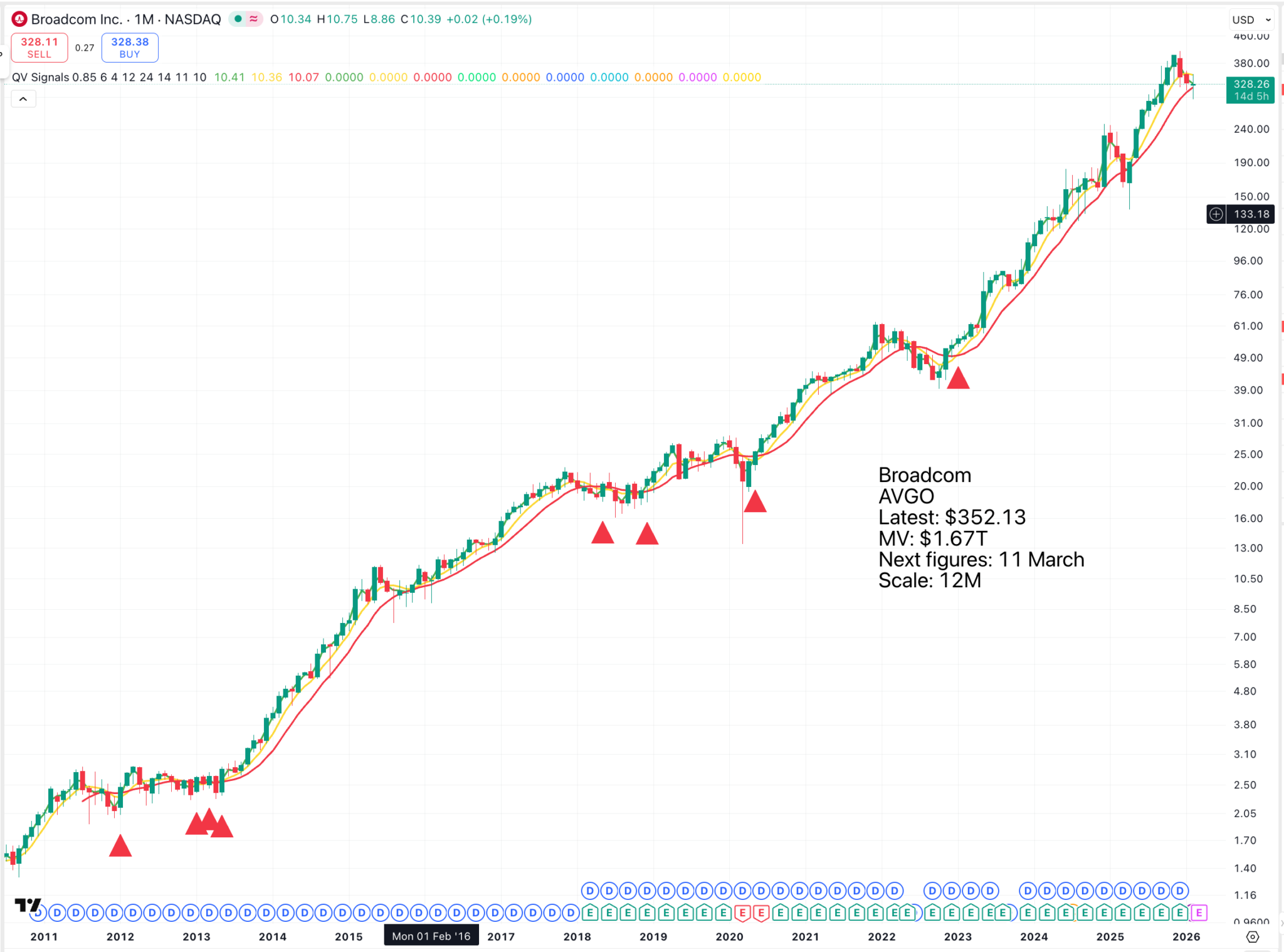
Broadcom (AVGO) is in such a strong uptrend that there have been few red-line buy signals over the last 15 years. A shorter-term buy signal is given when ALL three moving averages rise in tandem after a period in which one or more have been declining. At the moment, two of the moving averages are declining, so, on this basis, Broadcom shares are not a buy.
A reassuring note for investors is that, using my red line technique, all the major US indices are behaving strongly. There is no suggestion that shares generally should be sold.
Strategy – Beware Momentum
This is a cruel market for investors like me who are drawn to strong growth, the stronger the better. Shares in the fastest-growing companies are among the ones suffering the most.
The reason for this could be what I call the Bitcoin effect. Nobody knows what the correct price for Bitcoin is. Best guess is somewhere between $0 and $1 million. This allows for considerable volatility and makes us dependent on charts.
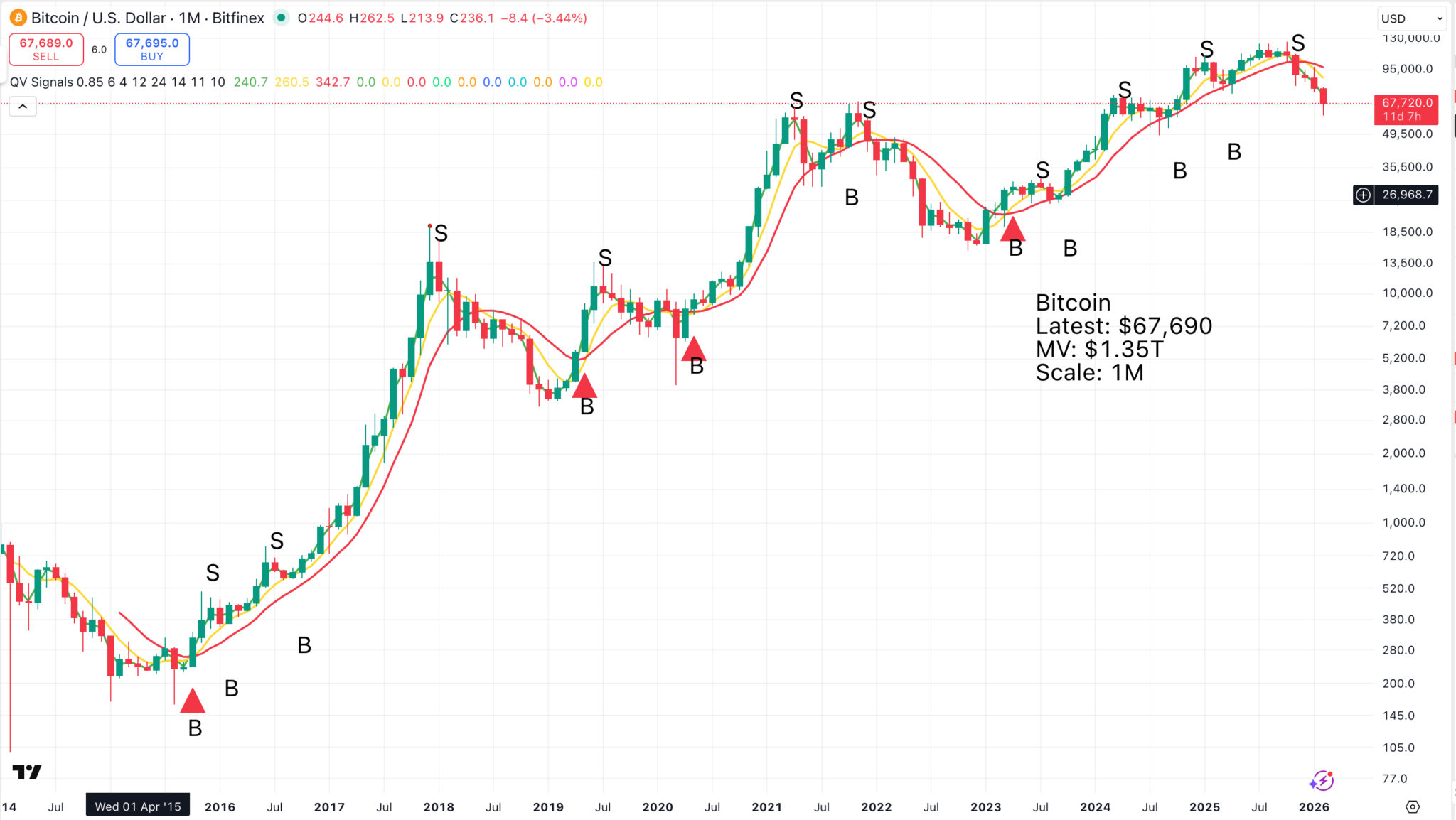
The buy and sell signals are asymmetrical. A sell signal is given whenever the shortest green moving average turns down. A buy signal is given when all the moving averages are climbing, which means that the longest moving average, which is falling, must turn higher. Buy signals are rare, especially when the red moving average turns higher. These signals work well but require great patience.
There is a case for saying that the bitcoin price is driven chiefly by investor optimism. Optimism has been draining out of the US stock market since October 2025.
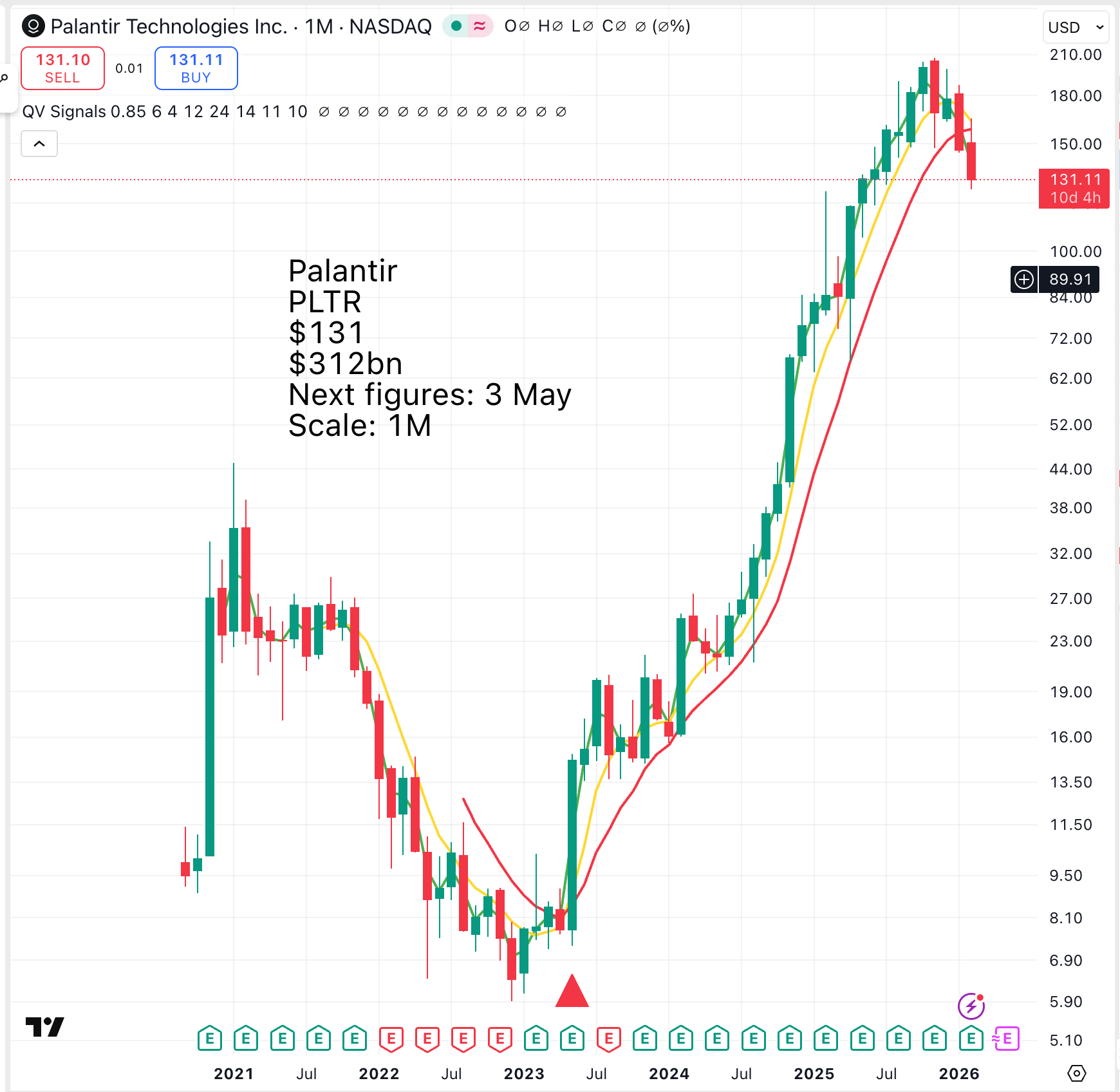
In light of this, we can understand better what is happening to Palantir shares. The growth has been everything investors could have wished for but like Bitcoin, the share price is not solidly rooted in fundamentals but reflects investor optimism about the 10-year outlook for this incredible business. If investors are no longer prepared to look 10 years ahead, a valuation in the hundreds of billions for a company with sales of less than $10bn can be vulnerable. The shares have been sliding since October 2025.
Take any exponentially growing share, and we see similar problems. But there is a positive side to this. Combine a sharply falling share price with explosive, 100pc-plus growth, and the valuation drops at an incredible rate. Even if no one knows the correct price, the shares can quickly become cheap, setting the stage for dramatic rebounds.
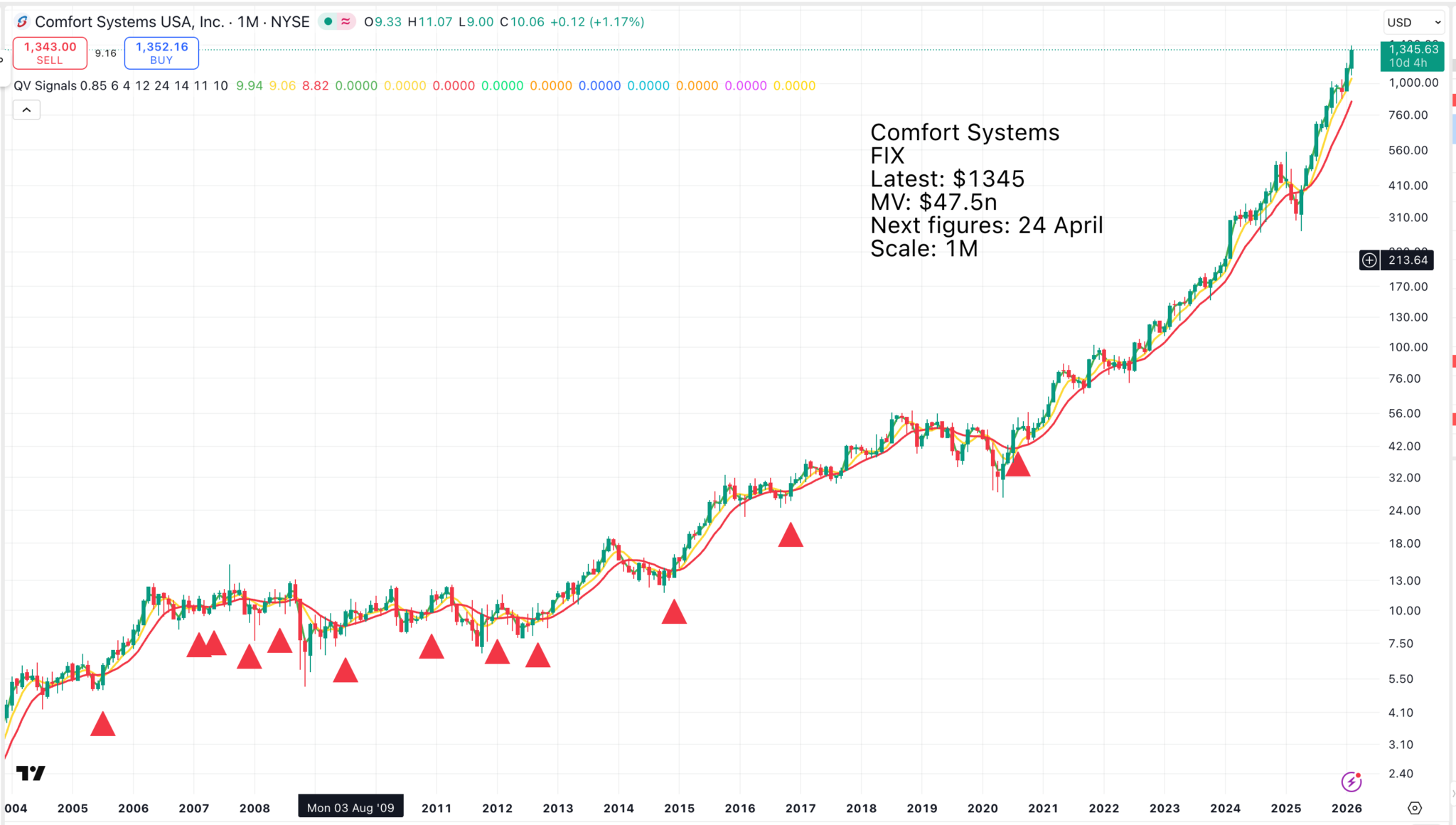
The shares that are suffering are the momentum plays. The growth in data centre spending is on such a massive scale that many companies are benefiting, so plenty of shares looking good have not attracted the same attention from momentum investors. Comfort Systems supplies the plumbers and electricians who are needed to make the data centres work. The company’s secret sauce is an endless stream of value-adding acquisitions. As you can see, the last major buy signal was a long time ago, but it was a very good one.
Shares don’t all signal at the same time, so we are stepping up the hunt.